
The recent release of Jeffrey Epstein-related documents by the U.S. Department of Justice has ignited a storm of controversy, as nearly all content in the files was heavily redacted. Rather than shedding light on one of the most notorious cases in recent American history, the release has left journalists, politicians, and the public questioning the transparency and accountability of the justice system.
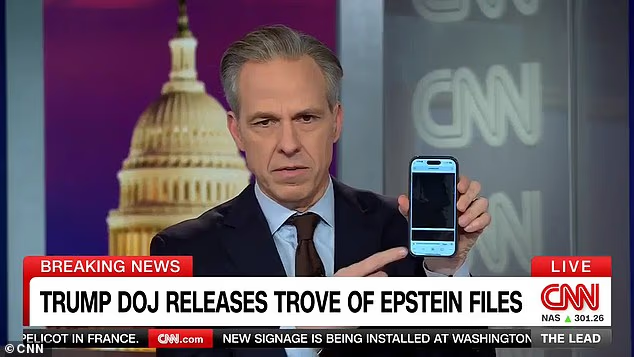
On major news networks, the striking visual of hundreds of pages blacked out dominated coverage. CNN anchor Jake Tapper, in a live segment, scrolled through the documents on his phone, revealing pages almost entirely obscured by thick black bars. “This is the transparency we get,” Tapper remarked, expressing a frustration shared by many who had hoped the release would provide clarity about Epstein’s crimes and his network of associates. The sight of nearly blank pages sparked an immediate reaction across social media, where clips of Tapper’s segment circulated widely, fueling debates about government openness and the protection of powerful figures.
Critics argue that the redactions obscure critical information that could illuminate the full scope of Epstein’s operations and implicate other influential individuals. Democratic lawmakers were particularly vocal, pointing out that the Department of Justice and Attorney General Pam Bondi failed to comply with legal requirements to release pertinent information. “The American people deserve more than vague statements and blacked-out pages,” said one congresswoman, highlighting the widespread frustration within political circles.
The controversy has only intensified because of the conflicting narratives surrounding the purpose of the redactions. White House spokesperson Abigail Jackson defended the decision, emphasizing that the edits were necessary to protect the privacy and safety of Epstein’s victims. “It’s clearly stated here that the documents were edited to protect the victims. It’s not appropriate to demand the disclosure of victims’ names,” she said. This explanation, however, has done little to calm public concern. Many observers point out that while protecting victims is essential, the sheer volume of redactions creates the perception that other motives—such as shielding powerful individuals connected to Epstein—may also be at play.
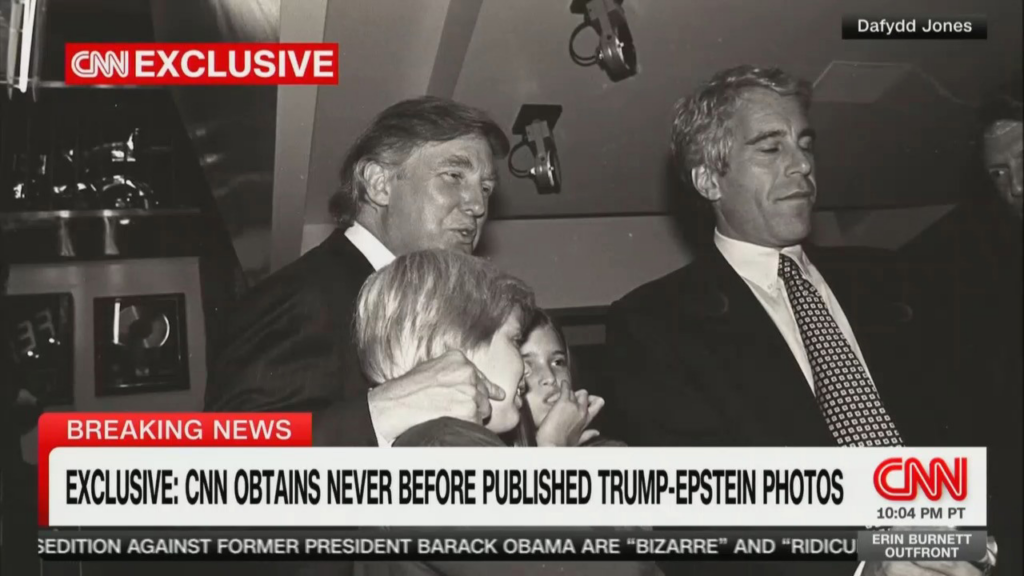
Adding fuel to the fire, reports emerged that at least 16 files from the Epstein case, released the day before, mysteriously disappeared from the Department of Justice website. Some of these files reportedly included photographs involving former President Donald Trump, raising questions about why they were removed and what they contained. The sudden disappearance of documents only intensified skepticism and speculation, prompting critics to accuse the government of selective transparency.
Legal experts and journalists have weighed in on the matter, noting that while protecting victims is legally and ethically important, the public has a right to understand how the justice system handles high-profile cases involving influential figures. The Epstein case, with its web of connections to wealthy and politically powerful individuals, has long been a source of intrigue and concern. Many believe that the lack of clear information undermines trust in the legal system and prevents meaningful accountability.
On social media, the blacked-out documents became a symbol of frustration. Users shared images of the redacted pages alongside sarcastic commentary about “the most transparent government ever,” while others highlighted the irony that, despite the heavy censorship, the release had sparked more questions than answers. Memes, threads, and opinion pieces proliferated, reflecting a public eager for clarity but left with little to go on.
Politically, the debate over the documents reflects deeper divisions in the U.S. The Democratic Party has criticized the Justice Department for failing to fully disclose information, while some Republican figures have defended the decision to protect victims’ identities. This partisan tension highlights the challenge of balancing privacy and transparency, particularly in a case as sensational and politically charged as Epstein’s.
Historians and social commentators have also noted the symbolic impact of the redactions. In an age where information is more accessible than ever, the sight of hundreds of blacked-out pages serves as a stark reminder of the limitations of transparency, especially when it intersects with wealth, power, and influence. Epstein’s network, which included high-profile politicians, celebrities, and business leaders, makes the case emblematic of the broader struggle to hold the elite accountable in a legal system often criticized for unequal treatment.
For victims of Epstein’s crimes, the release of heavily redacted documents is a double-edged sword. While their identities are rightfully protected, many victims express frustration that critical details that could illuminate the full extent of the abuse and its enablers remain hidden. Advocacy groups argue that real justice requires more than symbolic gestures; it demands clarity, accountability, and systemic reform to prevent similar abuses in the future.
As the public grapples with the released documents, the story of Epstein continues to evolve. Legal analysts anticipate that questions surrounding the redactions, missing files, and potential political connections will dominate headlines for months, if not years. Investigations and lawsuits related to Epstein’s estate, alleged accomplices, and victims’ claims remain ongoing, ensuring that the saga will not fade from public attention anytime soon.
Ultimately, the blacked-out pages serve as a stark visual metaphor for a case mired in secrecy and controversy. They highlight the tension between protecting victims and providing transparency, the challenges of holding the powerful accountable, and the persistent skepticism of a public eager for truth. While the Department of Justice maintains that the redactions are necessary and appropriate, the public response suggests that for many, this release represents less a triumph of justice than a reminder of the complexities and frustrations inherent in one of the most notorious legal sagas in modern American history.
The Epstein case, with its intertwining of crime, power, and secrecy, remains a defining example of the difficulties facing the American justice system. The heavily redacted documents, the missing files, and the heated debates surrounding them underscore a critical question: in a society that values both privacy and accountability, how much transparency is truly enough? For now, the blacked-out pages stand as silent witnesses to a story that continues to captivate, infuriate, and perplex the nation.