ss VATICAN REAFFIRMS A CONTROVERSIAL STANCE: A newly issued doctrinal statement has drawn global attention as the Vatican firmly reiterates that Christian marriage is a permanent and exclusive bond between one man and one woman. The document, titled Una Caro (One Flesh: In Praise of Monogamy) and approved by Pope Leo XIV, describes marriage as an “unbreakable unity” that exists only when two people give themselves completely to one another for life. It also explicitly rejects polygamy, polyamory, and all multi-partner relationships, arguing that such arrangements undermine the dignity, equality, and moral foundation of marriage. At a time when global attitudes toward relationships are rapidly evolving, the Vatican’s message remains unequivocal: within Christian doctrine, marriage is a union of two people—no more, no less


Vatican City, January 5, 2026 – In a significant doctrinal statement released late last year, the Vatican has once again upheld the traditional Christian understanding of marriage as an exclusive, lifelong union between one man and one woman.

The document, titled Una Caro (One Flesh): In Praise of Monogamy – Doctrinal Note on the Value of Marriage as an Exclusive Union and Mutual Belonging, approved by Pope Leo XIV on November 21, 2025, and published on November 25, emphasizes monogamy not as a restriction but as a profound expression of human dignity, mutual belonging, and divine love.
This reaffirmation comes at a time when societal views on relationships are rapidly evolving, with increasing acceptance of polygamy in some cultures and polyamory in others.
The document explicitly rejects non-monogamous arrangements, including polygamy, polyandry, and same-sex unions, while praising the beauty of a committed bond between two individuals of opposite sexes.
Historical and Scriptural Foundations
The doctrinal note traces the roots of Christian marriage back to Sacred Scripture.
From the creation account in Genesis, where God forms Eve as a suitable partner for Adam, declaring that “a man shall leave his father and mother and cleave to his wife, and the two shall become one flesh” (Genesis 2:24), the document highlights God’s original plan for marriage as a monogamous union.
Although polygamy appears in the Old Testament among figures like Abraham and David, the text notes that these instances often led to conflict and division, contrasting with passages in the Song of Songs and wisdom literature that celebrate exclusive, faithful love.
Jesus Christ, in the Gospels, restores marriage to its primordial intent. Referring to the “beginning,” He teaches that divorce is not part of God’s design and reaffirms the indissoluble bond between one man and one woman (Matthew 19:4-6). St.
Paul further elevates this in Ephesians 5, portraying marriage as a reflection of Christ’s unbreakable union with the Church.
Early Church Fathers, such as St. Augustine and St. John Chrysostom, defended monogamy as essential for true communion and fidelity. The document draws extensively on their writings, noting how monogamy frees individuals from disordered desires and directs sexuality toward genuine love.
Papal Teaching and Modern Challenges
Building on centuries of tradition, the note references key papal documents. Pope Leo XIII’s 1880 encyclical Arcanum Divinae defended monogamy as a safeguard for women’s dignity, arguing that it ensures equality and mutual respect—principles that polygamy undermines.
Later popes, including Paul VI in Humanae Vitae and John Paul II in his Theology of the Body, emphasized the unitive and procreative dimensions of marital love, insisting that only a monogamous heterosexual union fully realizes these.
Pope Leo XIV’s approval of Una Caro aligns with his earlier statements affirming marriage as a “total, faithful, fruitful love between a man and a woman.” The document responds particularly to concerns from African bishops, where polygamy remains a cultural practice in some regions, creating pastoral challenges for converts.
It provides guidance for evangelization, encouraging a positive presentation of monogamy rather than mere condemnation.
In the West, the rise of polyamory—consensual non-monogamous relationships—is addressed as a modern illusion. The text argues that seeking intensity through “a succession of faces” fragments love, leading to selfishness and isolation. Instead, monogamy offers a path to infinite love, mirroring God’s faithful covenant.
The document explicitly states that marriage is an “indivisible union” requiring complete commitment from two individuals. It rejects polygamy and polyandry, noting that only exclusivity preserves equality and integrity.
While not primarily focused on same-sex relationships, the note’s consistent definition of marriage as between a man and a woman implicitly reaffirms the Church’s longstanding teaching that same-sex unions cannot constitute true marriage, as they lack the complementary difference essential for becoming “one flesh.”
The Beauty of Monogamous Love

Far from portraying monogamy as burdensome, Una Caro celebrates it as a “promise of the infinite.” Drawing on philosophy, poetry (including Pablo Neruda and Eugenio Montale), and anthropology, the document illustrates how exclusive love fosters deep reciprocity—the “we two” that emerges in committed couples.
Monogamy, it argues, protects vulnerability and promotes tenderness. Spouses are called to “tender care,” openness to life, and service to others, especially the poor—a theme echoing Pope Leo XIV’s exhortation Dilexi Te. Even childless marriages retain full dignity, as fruitfulness extends to spiritual and charitable works.
The note condemns all forms of violence in relationships and calls for a “new pedagogy” to teach young people about lasting commitment in a culture of temporariness.
Implications for the Contemporary World
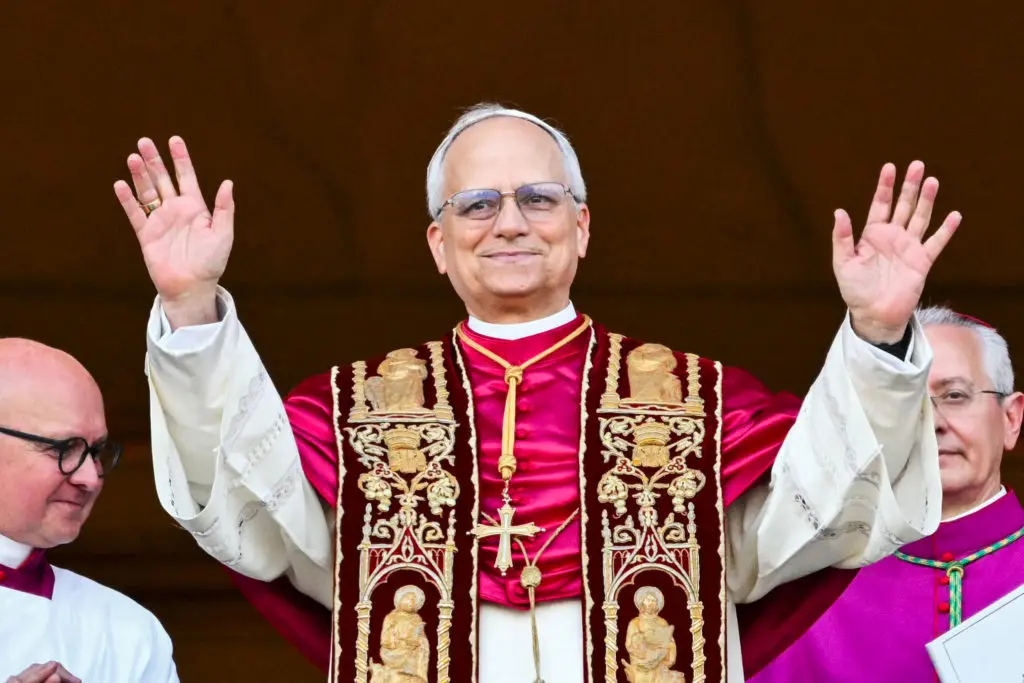
This doctrinal note arrives amid global debates on marriage. In many societies, divorce rates soar, infidelity is trivialized, and alternative models gain traction. Surveys indicate growing acceptance of open relationships, particularly among younger generations. Yet, the Vatican insists that true human flourishing lies in fidelity.
For Catholics, Una Caro reinforces preparation for marriage and support for struggling couples. It encourages priests and educators to present monogamy attractively, rooted in grace rather than legalism.
Critics may view the document as outdated, but supporters see it as a timely defense of human dignity. By praising monogamy’s grandeur, the Church invites all to experience love that transcends immediacy—a love that, with divine help, endures forever.
In an era of fragmentation, the Vatican’s message is clear: Christian marriage, as the union of one man and one woman, remains a beacon of hope, equality, and eternal belonging.