For nearly two decades, Carrie Underwood has occupied a rare position in American pop culture: a superstar with towering commercial success, critical respect, and virtually no scandals. In an industry where controversy often fuels relevance, her reputation for being “too perfect” has quietly become the most debated aspect of her career.
This paradox raises an uncomfortable question for modern celebrity culture: When did stability, discipline, and restraint become liabilities?

The Rise of an “All-American” Ideal
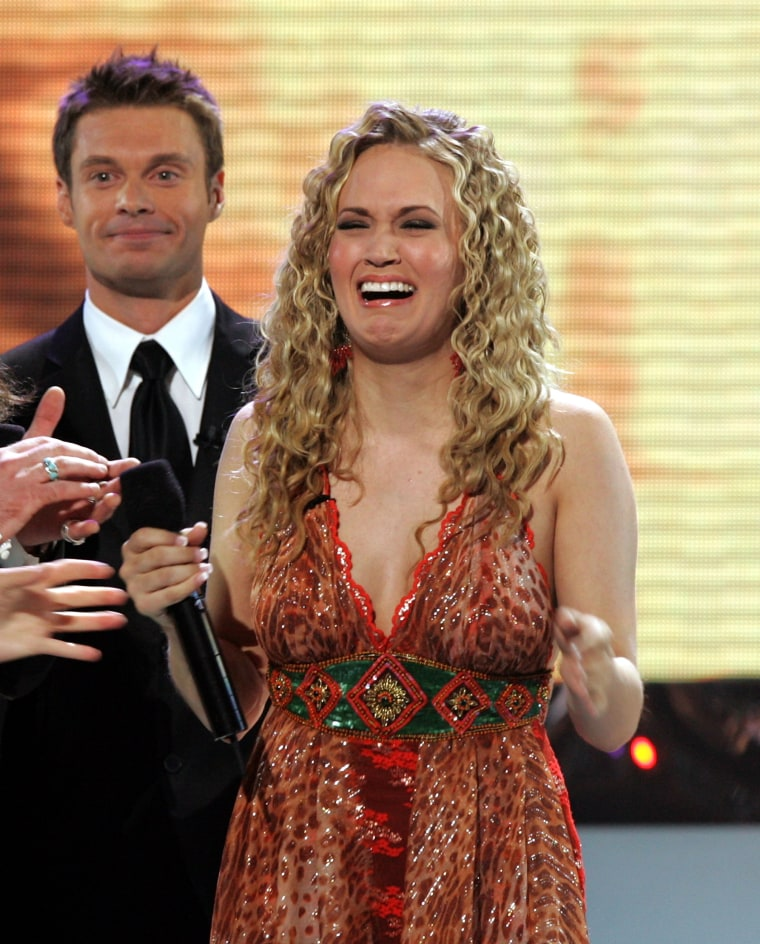
Carrie Underwood emerged from American Idol in 2005 as the embodiment of a familiar but powerful archetype — the wholesome, small-town talent with extraordinary ability and impeccable work ethic. From the beginning, her public image was carefully aligned with values long celebrated in country music: humility, faith, family, and grit.
Unlike many of her peers, Carrie did not reinvent herself with each album cycle. She did not court controversy with shocking fashion, polarizing political statements, or volatile public relationships. Instead, she built a brand rooted in consistency. The voice was always undeniable. The performances were always polished. The behavior was always professional.
For fans, this reliability became a source of comfort. For critics, it eventually became a problem.
“Too Safe” in an Era That Rewards Chaos
As pop culture shifted in the 2010s, celebrity expectations changed. Artists were increasingly rewarded not just for talent, but for vulnerability, rebellion, and public conflict. Messy eras became markers of authenticity. Reinvention was celebrated. Silence, on the other hand, began to feel suspicious.
Against this backdrop, Carrie’s steadiness was reframed by some commentators as emotional distance. Critics used phrases like “too polished,” “over-managed,” or “predictably excellent.” The implication was not that she lacked skill, but that she lacked risk.
This critique revealed more about the culture than about Carrie herself. In an age addicted to spectacle, her refusal to self-destruct felt almost subversive — yet paradoxically dull to those conditioned to expect chaos.
The Absence of a “Breaking Point”
Many iconic artists are defined by a moment of collapse or confrontation: a public feud, a genre-shattering pivot, a controversial interview. Carrie Underwood has no such chapter.
Even after a serious facial injury in 2017 — a moment that could have been sensationalized — she chose restraint. Rather than offering dramatic revelations or exploiting public curiosity, she spoke softly, shared selectively, and moved forward.
To some observers, this restraint was admirable. To others, it felt like a missed opportunity for rawness. In the social media age, withholding can be interpreted as a lack of authenticity — a dangerous accusation for any artist.

Perfection as a Gendered Criticism
Notably, the “too perfect” label is rarely applied to male artists in the same way. Discipline in men is often praised as professionalism or mastery. In women, it is more easily reframed as coldness, inaccessibility, or emotional opacity.
Carrie’s control over her image has sometimes been interpreted as emotional distance, rather than self-preservation. Her avoidance of public conflict is occasionally mistaken for a lack of depth, rather than a deliberate boundary.
This double standard reveals a deeper tension: female artists are often expected to prove their humanity through suffering made public. Carrie’s refusal to perform that suffering has unsettled critics who equate exposure with honesty.
Commercial Success vs. Cultural Cool
There is also an undeniable cultural divide between popularity and perceived “cool.” Carrie’s fan base is massive, loyal, and multigenerational. Yet critical culture often favors artists who disrupt rather than maintain.
By traditional metrics, her career is nearly flawless: record-breaking tours, chart-topping albums, and industry respect. But cultural discourse increasingly prioritizes narrative drama over longevity. Carrie’s story, built on consistency rather than chaos, resists easy mythologizing.
In other words, her biggest “controversy” is not what she has done — but what she has refused to do.
Discipline as Defiance
Ironically, Carrie Underwood’s perfection may be her quiet form of rebellion. In a system that monetizes breakdowns and public mistakes, choosing discipline is an act of resistance. She has declined to trade dignity for virality or stability for headlines.
This does not mean her career lacks emotion or intensity. Onstage, her performances are ferocious. Her vocals carry pain, power, and vulnerability. But she has chosen to express those qualities through music — not spectacle.
The Cultural Verdict
Ultimately, the debate over Carrie Underwood’s “perfection” says less about her artistry and more about shifting cultural appetites. As audiences grow accustomed to scandal as entertainment, an artist who offers excellence without implosion becomes an anomaly.
Carrie Underwood is not boring. She is intentional. She is not distant. She is private. And in an industry that thrives on exposure, that choice has become her most controversial trait.
Perhaps the real question is not why Carrie seems “too perfect,” but why modern culture has become so uncomfortable with grace that lasts.