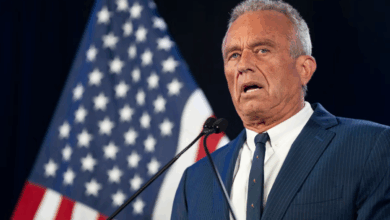
f.BREAKING NEWS: A surprising development has just emerged in the Super Bowl discussion – and people are already arguing about it.f

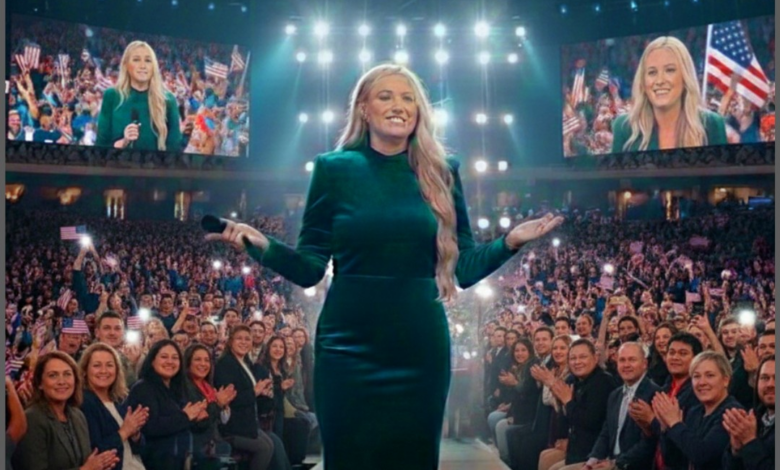
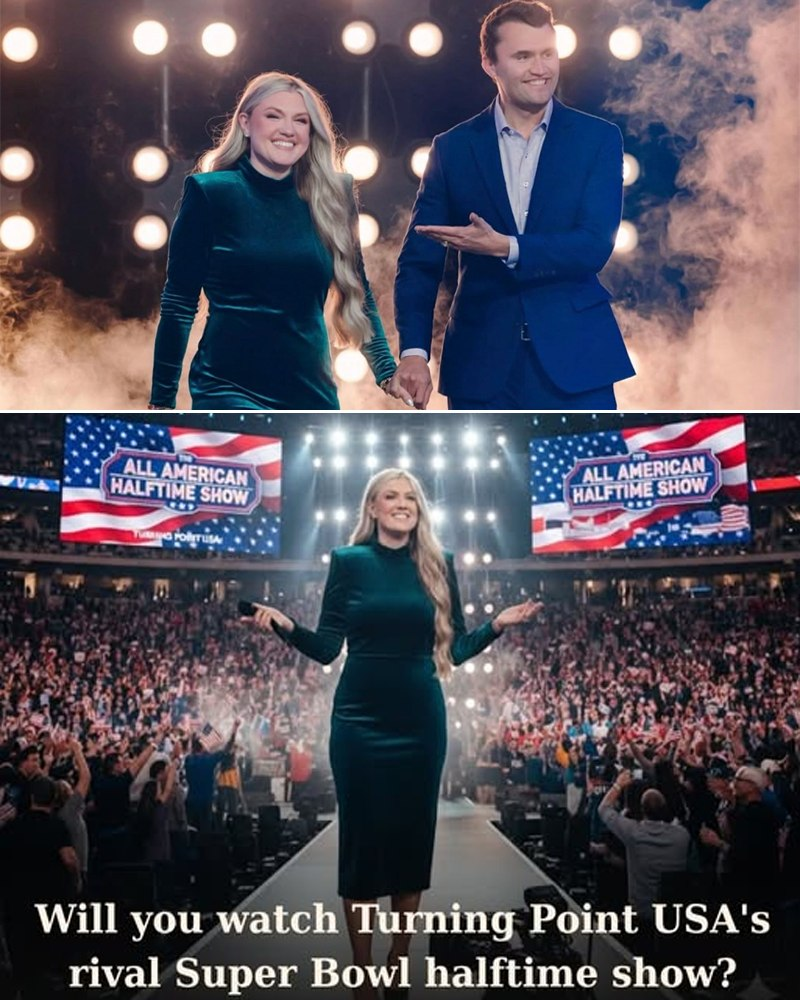
Turning Point USA Announces ‘All American’ Super Bowl Halftime Show
In a move that has ignited cultural and political debates, Turning Point USA, the conservative advocacy group founded by Charlie Kirk, has announced plans to host an alternative Super Bowl halftime show titled “The All American Halftime Show.” Scheduled for February 8, 2026, the event aims to counter the official halftime performance by Puerto Rican artist Bad Bunny, who has been selected as the headliner for Super Bowl LX at Levi’s Stadium in Santa Clara, California.
The Controversy Surrounding Bad Bunny
Bad Bunny’s selection has sparked criticism among some conservative circles due to his past political statements, including criticism of former President Donald Trump, and his decision to avoid U.S. mainland venues during his recent tour, citing concerns over U.S. Immigration and Customs Enforcement (ICE) enforcement. Additionally, his performances are primarily in Spanish, which some critics argue may not resonate with the predominantly English-speaking Super Bowl audience. House Speaker Mike Johnson has suggested that a more traditionally patriotic artist, such as Lee Greenwood, would be a preferable choice.
Related : Erika Kirk’s Powerful Eulogy at Charlie Kirk’s Memorial Service
Turning Point USA’s Response
In response to the backlash, Turning Point USA, now led by Erika Kirk, widow of the late Charlie Kirk, announced “The All American Halftime Show.” The organization describes the event as a celebration of “faith, family, and freedom,” aiming to provide an alternative that aligns with conservative values. While specific performers have not yet been announced, the group has launched a survey inviting the public to vote on preferred music genres, including Americana, classic rock, country, hip hop, pop, worship, and “anything in English,” reflecting a preference for English-language performances .
Cultural and Political Implications
This development underscores the ongoing cultural and political divisions in the United States, particularly regarding representation and identity in major entertainment events. Supporters of Bad Bunny’s performance view it as a milestone for Latino representation and a reflection of the evolving multicultural landscape of American culture. Conversely, critics argue that the selection of a non-English-speaking artist for such a prominent event may not resonate with a broad American audience.

As the date approaches, all eyes will be on Super Bowl LX to see how the two events unfold and what they signify about the current state of American cultural and political discourse.
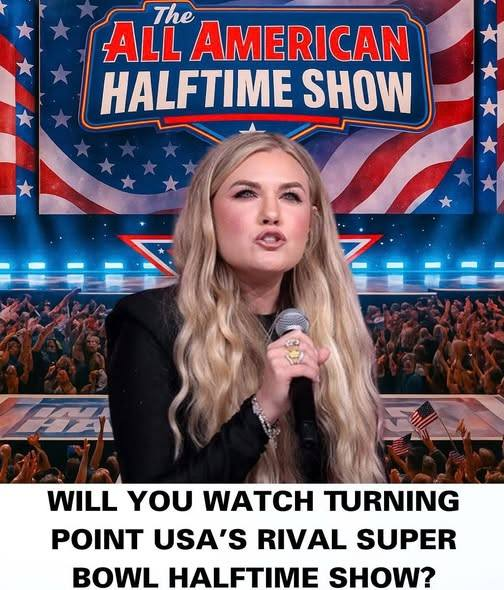
When: February 8, 2026, around 8:30–9:00 PM ET
Where: Live on Turning Point USA’s website, YouTube, Rumble, and select conservative media partners
America Just Got a Second Halftime Option — and the Debate Is Only Beginning
The Super Bowl has always been more than a game. For one night each year, it becomes a cultural mirror—reflecting what America celebrates, debates, and argues over in real time. That’s why a quiet announcement from Turning Point USA this week landed with such force.
Without teasers, countdowns, or celebrity rollouts, TPUSA confirmed the concept of “The All-American Halftime Show,” a patriotic alternative designed to air during the Super Bowl 60 halftime window. And within minutes, the conversation shifted.
Not because of who’s performing—no names were announced.
Not because of where it will air—no broadcast partner revealed.
But because of why it exists.
Led by Erika Kirk, the project is being framed around three words that rarely dominate the biggest night in sports anymore: faith, family, and freedom. In a brief statement, Kirk made the intent clear.
“This isn’t about competition,” she said. “It’s about reminding America who we are.”
That line alone was enough to ignite timelines.
Why This Announcement Hit So Hard
In recent years, halftime has become synonymous with spectacle—global pop stars, massive production budgets, viral moments engineered to dominate social media. Whether viewers love or loathe that direction, one thing is undeniable: halftime has become a cultural battleground.
The All-American Halftime Show enters that space not as a parody or protest, but as an alternative. And that distinction matters.
Organizers are careful to emphasize that this isn’t meant to replace the NFL’s official show or attack it. Instead, it’s positioned as a parallel option—something viewers can choose if they’re craving meaning over maximalism.
That framing has struck a nerve.
Supporters describe the idea as overdue. They see it as a return to values-based storytelling, a moment of reflection on a night that often prioritizes volume and flash. To them, the absence of performers and partners feels intentional—almost refreshing in an age of overexposure.
Critics, however, are more skeptical. They question whether a values-forward broadcast during the Super Bowl inevitably becomes political, even if organizers insist otherwise. Some argue that creating a separate halftime moment risks deepening cultural divides rather than healing them.
And that tension is exactly why the announcement is spreading.
The Power of What Hasn’t Been Said
Perhaps the most intriguing aspect of the reveal is what’s missing.
No confirmed artists.
No production details.
No platform announcement.
Media insiders suggest that this silence is strategic. By withholding specifics, TPUSA has allowed the concept itself—not a celebrity name or sponsor—to take center stage. In doing so, they’ve invited the public into the conversation early, before the narrative hardens.
One unanswered question keeps resurfacing: who is this really for?
Is it for viewers who feel alienated by modern halftime spectacles?
For families looking for something they can watch together without discomfort?
For faith-oriented audiences who want representation on a night that reaches over 100 million people?
Or is it simply a cultural signal—an attempt to remind the industry that a significant portion of America still values restraint, reverence, and tradition?
The lack of clarity has only amplified interest.
A Broader Shift in Entertainment?
The timing of the announcement is also notable. Across film, television, and music, there’s growing evidence of audience fatigue with formula-driven content. Viewers are fragmenting, choosing niche platforms and values-aligned media over mass-market programming.
In that context, the All-American Halftime Show feels less like a disruption and more like a reflection of where entertainment is headed—choice over consensus.
Instead of one monolithic halftime moment, America may be moving toward multiple simultaneous experiences, each resonating with different audiences. That doesn’t diminish the Super Bowl’s reach; it complicates it.
And complication is uncomfortable.
For decades, halftime was one of the few cultural moments almost everyone watched together. Introducing a parallel option challenges that shared experience—but it also acknowledges a reality that already exists.
America is diverse. Its values are debated. And not everyone wants the same thing from entertainment.
What Happens Next
For now, the All-American Halftime Show remains more concept than concrete event. Organizers have indicated that further details will come through verified channels, urging the public to separate confirmed information from speculation.
That restraint hasn’t slowed the discussion. If anything, it’s accelerated it.
Supporters are watching closely for signs of musical direction—will it lean toward country, gospel, classical, or something else entirely? Critics are scanning every word from TPUSA leadership, searching for signals about tone and intent.
And media analysts are asking a bigger question: what happens if this works?
If enough viewers choose an alternative halftime experience, it could influence how future events are programmed—not just by the NFL, but across live television.
For now, one thing is clear.
America didn’t just get a new halftime idea.
It got a new conversation about what halftime means.