f.A post is going viral claiming Elon Musk’s wealth is so massive that even burning $1 million every single day wouldn’t touch it for thousands of years. In the same breath, it points out that experts often cite around $40 billion a year as the number needed to end world hunger. The implication is obvious… and uncomfortable.f

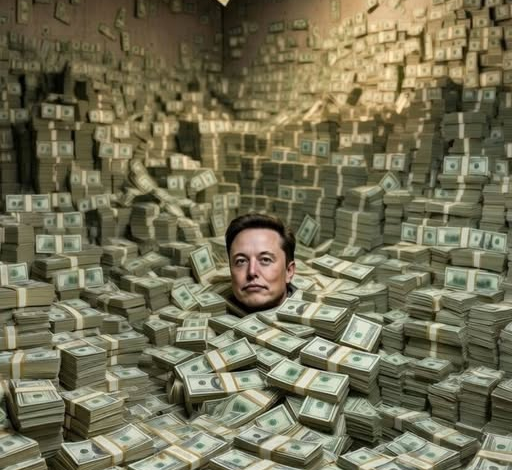
Can One Man’s Fortune End World Hunger? The Numbers That Won’t Go Away
The numbers are so large they almost feel fake.
$834.8 billion.
That is the estimated net worth currently attached to Elon Musk’s name — a figure so massive it barely fits into everyday human understanding. To put it into perspective, a claim circulating widely online breaks it down like this: if Musk spent $1 million every single day, without earning another cent, it would take more than 2,200 years to run out of money.
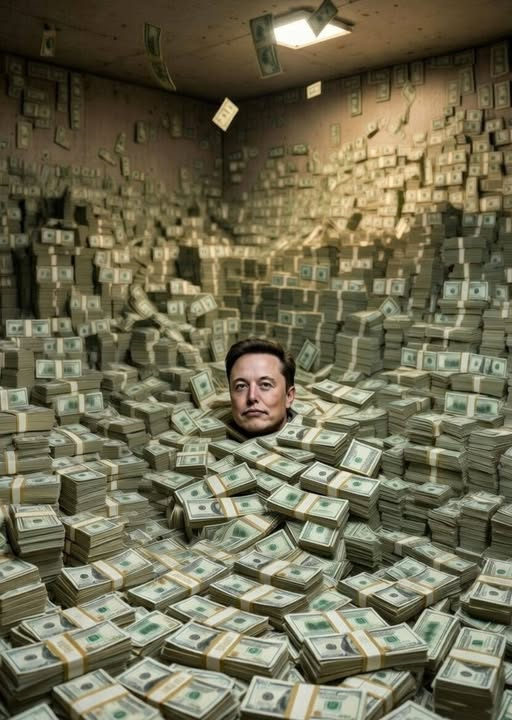
It’s the kind of comparison that stops people mid-scroll. Not because it’s flashy — but because it forces a question many would rather avoid.
If world hunger could be solved with roughly $40 billion a year, as multiple international aid organizations have suggested in past estimates, why does hunger still exist in a world where one individual holds wealth measured in centuries?
This is not a new question. But recently, it’s resurfaced with renewed intensity — and sharper edges.
When Big Numbers Become Moral Questions
The argument making the rounds online is simple on the surface. World hunger, according to organizations like the United Nations World Food Programme, could be significantly reduced — even eradicated in its most extreme forms — with sustained annual funding in the tens of billions. Meanwhile, Musk’s fortune grows and shrinks with stock prices, but remains historically unprecedented.
The conclusion many leap to is emotional and direct: one person could fix this.
Supporters of this view argue that extreme wealth creates extreme responsibility. They see hunger not as a technical problem, but as a moral failure — one made more glaring by the scale of modern billionaires.
To them, the math feels damning.
The Counterargument: It’s Not That Simple
Critics of the claim are quick to push back. First, they argue, net worth is not cash. Musk’s wealth is largely tied up in shares of companies like Tesla and SpaceX. Liquidating even a fraction of it would impact markets, companies, employees, and pensions around the world.
Second, they point out that “ending world hunger” is not a one-time transaction. Hunger is tied to war, corruption, logistics, climate change, infrastructure, and politics. Money alone does not build stable governments or stop conflicts that block food aid.
In this view, the viral math oversimplifies a deeply complex problem — and unfairly personalizes what is, at its core, a global systems failure.
But even critics admit something uncomfortable: dismissing the question entirely feels evasive.
Elon Musk’s Own Words
The debate took on new life in 2021 when Musk publicly responded to claims that a small portion of his wealth could solve world hunger. His reply was cautious but notable.
He said he would sell Tesla stock and donate the money if the World Food Programme could present a clear, transparent plan showing how the funds would solve hunger sustainably.
For a moment, the internet held its breath.
The plan came. The money didn’t.
Supporters of Musk argue that the proposal lacked long-term guarantees and relied on assumptions vulnerable to political instability. Critics counter that perfection became the enemy of action.
The moment passed — but the question lingered.
Why This Argument Won’t Die
What makes this debate so persistent isn’t just Musk. It’s what he represents.
For the first time in history, individual fortunes rival the GDPs of nations. Wealth accumulation has outpaced public imagination — and public trust. As inflation rises and food insecurity grows even in wealthy countries, the contrast becomes harder to ignore.
People aren’t just asking whether Musk can help.
They’re asking why the burden seems to fall on individuals at all.
If hunger is a global problem, why does its solution feel dependent on billionaire generosity instead of coordinated international action?
A System Built on Optional Compassion
Perhaps the most unsettling part of the debate is this: nothing legally compels extreme wealth to address extreme suffering.
Charity remains voluntary. Moral responsibility is subjective. And structural reform moves painfully slowly.
This leaves the public stuck between admiration and resentment — inspired by innovation, yet frustrated by inequality.
Some see billionaires as engines of progress whose companies create jobs, technology, and long-term solutions. Others see them as symbols of a system that rewards accumulation over distribution.
Both views can be true at once.
The Question Beneath the Math
Ultimately, the viral post about Musk’s wealth isn’t really about him.
It’s about what we expect from power.
Is extreme wealth simply a scoreboard of success? Or does it create obligations that go beyond taxes and charity galas?
And if ending hunger truly costs less than we collectively spend on luxury goods each year, what does that say about our priorities — as individuals, corporations, and governments?
The math may be debatable. The logistics may be complex. But the discomfort people feel when reading those numbers is real.
And until that discomfort finds a structural answer, the question will keep coming back:
In a world this rich, why are so many still starving?