The decision to reopen America’s childhood vaccine recommendations has landed like an earthquake beneath the foundations of public health — sudden, unsettling, and impossible to ignore. What began as a technical adjustment inside a federal advisory panel has rapidly evolved into a moment that could redefine how the United States approaches immunization, medical authority, and parental responsibility for a generation.
For decades, childhood vaccine schedules have occupied a rare space in American life: highly influential, deeply trusted by most physicians, and largely insulated from political turbulence. They were treated less as suggestions and more as settled doctrine — a framework that guided pediatric care, school requirements, and state health laws with remarkable consistency. That era may now be ending.
The first tremor came quietly. A vote by a Centers for Disease Control and Prevention advisory panel to modify the standing recommendation for the newborn Hepatitis B vaccine did not abolish the shot, nor did it signal an immediate shift in clinical practice. On paper, it was a technical recalibration. In practice, it carried symbolic weight. It suggested that recommendations once regarded as untouchable could be reopened, reexamined, and revised.
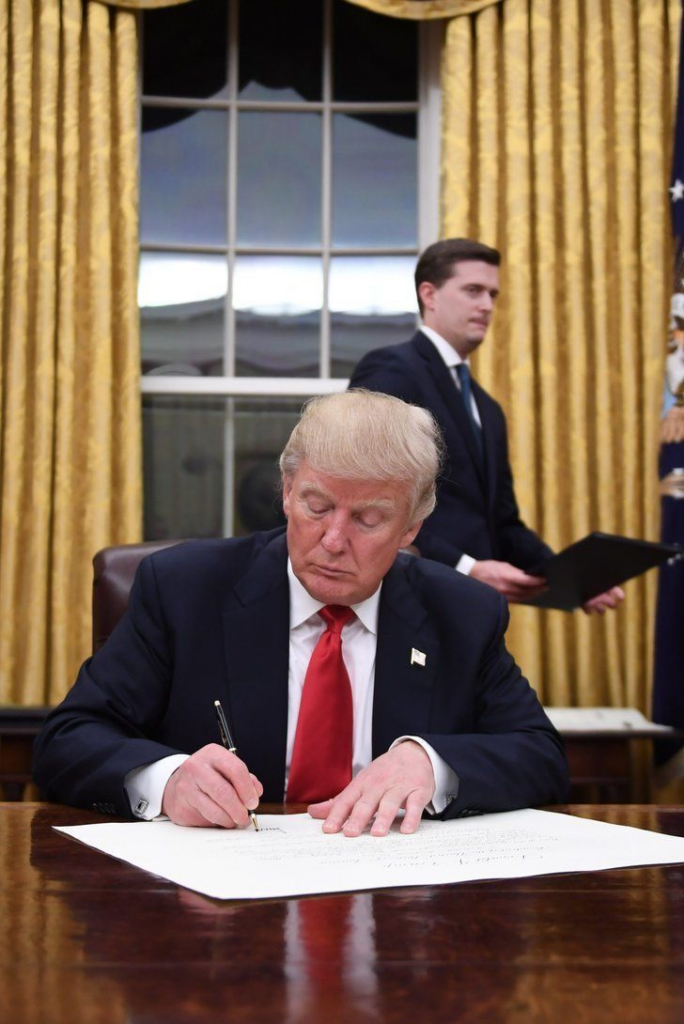
Then came the aftershock. A White House directive ordering a sweeping federal review of every childhood vaccine recommendation instantly changed the scale of the moment. This was no longer a narrow scientific discussion confined to advisory committees and medical journals. It was a direct challenge to the architecture of U.S. public health — a system built on the assumption that federal guidance provides a stable, science-driven backbone for states, hospitals, and schools.
To understand why this matters, it helps to recognize how deeply vaccine recommendations are woven into American life. Federal schedules do not merely inform doctors; they underpin school entry requirements, shape insurance coverage, influence pharmaceutical research priorities, and guide public messaging about risk and responsibility. When those schedules are reopened wholesale, the ripple effects extend far beyond the clinic.
Importantly, no vaccines have been “canceled” overnight. No shots have been pulled from shelves. Children are not suddenly left unprotected. Yet the act of reopening the entire framework signals something more profound than any single policy change. It introduces uncertainty into a system that has long relied on continuity and consensus.
One of the most consequential possibilities emerging from this review is a shift away from uniform national standards toward more individualized, risk-based guidance. For decades, the logic of a standardized schedule has been simple: broad protection produces herd immunity, minimizes confusion, and ensures equitable access. But critics have argued that one-size-fits-all recommendations fail to account for individual health profiles, family histories, or varying risk environments.
If federal guidance begins to emphasize flexibility over uniformity, states may respond in dramatically different ways. Some may adhere closely to existing schedules, valuing consistency and public confidence. Others could loosen mandates, expand exemptions, or introduce alternative pathways. The result could be a fragmented immunization landscape — a patchwork of policies that varies not just by region, but by political culture.
Such fragmentation would mark a historic departure from the postwar public health model that helped eliminate or drastically reduce diseases like polio, measles, and rubella. That model depended on widespread compliance, institutional trust, and the perception that recommendations were grounded firmly in apolitical science. Reopening the framework risks weakening each of those pillars.
At the center of this shift stands the American parent. For years, many families experienced vaccination as a largely automatic process: a schedule handed down by trusted professionals, reinforced by schools and pediatricians, and rarely questioned unless a specific medical issue arose. That default may be fading.
In a more flexible system, parents could find themselves facing choices that were once effectively made for them. Which vaccines to prioritize. When to administer them. How to weigh individual risk against communal benefit. Expanded choice may feel empowering to some families, especially those who have long felt unheard or pressured by rigid mandates. But it also carries a heavier burden.
Choice demands knowledge, time, and discernment. It requires parents to navigate complex medical information, assess competing claims, and make decisions under conditions of uncertainty. In a digital environment saturated with misinformation alongside legitimate debate, that task can be daunting. Responsibility increases — and so does the potential for error.
Physicians, too, are likely to feel the strain. Pediatricians accustomed to clear federal guidance may now find themselves acting more as counselors than enforcers, spending additional time discussing options, risks, and tradeoffs with families. While this could strengthen doctor-patient relationships, it also complicates clinical practice and exposes providers to greater legal and ethical ambiguity.
The political implications are impossible to ignore. Vaccines have increasingly become a proxy for broader cultural battles over trust in institutions, individual liberty, and the role of government. A federal review of all childhood vaccine recommendations inevitably feeds into those debates, regardless of the scientific rigor applied. Supporters frame the move as overdue transparency and accountability. Critics warn it undermines confidence in one of public health’s most successful tools.
Public trust sits at the heart of the issue. Vaccination programs rely not only on evidence, but on belief — belief that authorities act in good faith, that recommendations are based on the best available data, and that changes are driven by science rather than politics. Even a well-intentioned review risks eroding that trust if it appears reactive, ideological, or poorly communicated.
History offers both caution and perspective. Public health advances have often emerged from reassessment and reform. At the same time, periods of uncertainty have sometimes allowed preventable diseases to resurge. The challenge now is balancing legitimate scrutiny with the need for stability in a system that protects millions of children.
Whatever conclusions emerge from the federal review, one reality is already undeniable: the vaccine status quo in the United States has been disrupted. The assumption that childhood immunization policy is settled, uniform, and immune to political forces no longer holds.
The months ahead will test institutions, professionals, and families alike. Decisions made during this period could reshape not only immunization practices, but the broader relationship between citizens and public health authority. Whether this moment becomes a story of constructive reform or destabilizing division will depend on how transparently, carefully, and responsibly the process unfolds.
What is certain is that this is not a minor policy footnote. It is a turning point — one that may define how Americans think about vaccines, trust, and parental choice for decades to come.