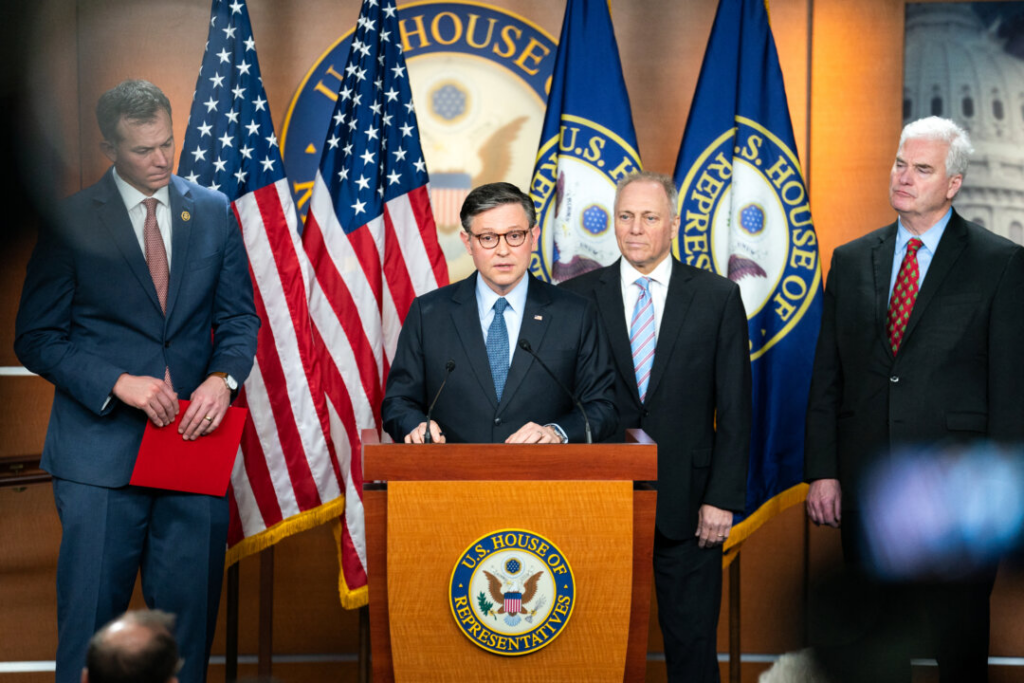
House Republicans say they are done debating theory and ready to act. With the introduction of the Lower Health Care Premiums for All Americans Act, GOP leaders argue they are offering what voters have long demanded: tangible solutions to a health care system they say has been mismanaged for years. Framed as a practical alternative to what they describe as endless spending and expanding bureaucracy, the legislation is positioned as a direct attempt to lower insurance premiums while shielding taxpayers from rising costs.
For Republicans, the bill is not just policy—it is a statement of governing philosophy.
The Core Promise: Lower Costs, Real Savings
At the heart of the proposal is a simple claim: health care premiums are too high, and Washington has failed to rein them in. Supporters say the bill would directly reduce the cost of insurance for families and individuals, while saving taxpayers an estimated $30 billion. That figure has become a central talking point, reinforcing the argument that reform does not require new taxes or massive spending packages.
Instead, Republicans say savings would come from structural changes—reducing inefficiencies, eliminating what they describe as wasteful subsidies, and restoring accountability to programs they believe have drifted away from their original purpose. The emphasis, they argue, is on sustainability rather than short-term relief.
A Sharp Contrast in Approaches
GOP lawmakers are framing the legislation as a clear alternative to Democratic health care policy. In their view, recent years have been defined by a strategy of pouring more taxpayer money into a system that continues to deliver higher costs without corresponding improvements in care or access.
Republicans argue that expanding government control has reduced competition and limited consumer choice, ultimately driving premiums upward. Their proposal, by contrast, emphasizes market-based solutions—using competition as a tool to discipline prices and encourage innovation.
The message is pointed: if more spending were the answer, health care would already be affordable.
Competition as a Cost-Control Tool
A central pillar of the bill is competition. Supporters argue that when insurers and providers are forced to compete for consumers, prices fall and quality improves. The legislation aims to remove barriers that Republicans say have insulated parts of the health care market from meaningful competition.
By expanding options and encouraging new entrants into the insurance market, GOP lawmakers believe consumers will gain leverage—choosing plans that fit their needs and budgets rather than being locked into limited offerings. In this framework, affordability is not mandated from Washington but achieved through choice.
Transparency and Accountability
Another major theme is transparency. Republicans argue that too often, patients are shielded from the true cost of care until the bill arrives. The proposed reforms emphasize clearer pricing and accountability mechanisms, allowing consumers to make informed decisions about their coverage and care.
Supporters say transparency also protects taxpayers. By tightening oversight and clarifying how funds are used, the bill aims to prevent cost overruns and ensure that public dollars are spent effectively. Accountability, they argue, has been missing from a system where no single actor bears responsibility for rising costs.
Protecting Taxpayers Alongside Patients
While lowering premiums is the headline goal, Republicans are equally focused on the taxpayer dimension. The estimated $30 billion in savings is presented as proof that reform can benefit both households and the federal budget.
GOP leaders argue that health care policy too often treats taxpayers as an unlimited resource. Their proposal, they say, rejects that mindset—seeking instead to align incentives so that savings are built into the system rather than added as an afterthought.
This dual focus—patients and taxpayers—is meant to broaden the bill’s appeal beyond those struggling with insurance costs alone.
Democratic Criticism and Open Questions
Democrats are expected to challenge both the assumptions and the projections behind the bill. Critics argue that market-driven reforms risk leaving vulnerable populations behind and that cutting federal involvement could reduce access for those who rely most on government programs.
They also question whether promised savings would materialize without shifting costs elsewhere. From their perspective, government intervention is necessary to ensure equity and protect consumers from market failures.
Republicans counter that affordability itself is a form of access—and that a system people cannot afford is functionally unavailable.
A Political Test Ahead of Elections
Beyond policy substance, the bill carries political significance. Health care remains one of the most powerful issues for voters, and Republicans are eager to demonstrate that they can offer solutions rather than just criticism.
By advancing the Lower Health Care Premiums for All Americans Act, GOP leaders hope to reframe the debate: not whether health care needs fixing, but how. They want voters to see a choice between larger government and what they describe as smarter governance.
The vote itself, regardless of outcome, will serve as a marker—forcing lawmakers to take a public position on cost, accountability, and the role of government.
What Supporters Say Is at Stake
Supporters argue that the stakes are straightforward. Families are paying more each year for coverage that feels increasingly out of reach. Employers struggle with rising insurance costs. Taxpayers shoulder growing federal obligations. Doing nothing, they say, is not an option.
In their view, the bill represents a decisive step toward a health care system that works for patients rather than bureaucracies—one that prioritizes affordability without sacrificing choice or fiscal responsibility.
A Broader Debate About the Future of Health Care
Whether the legislation advances or stalls, it underscores a deeper divide in American health care policy. One side sees government as the primary solution to rising costs. The other sees competition and accountability as the missing ingredients.
House Republicans are betting that voters are ready for a reset. Their message is concise and deliberate: lower premiums, protect taxpayers, and give Americans more control over their health care decisions.
As the debate unfolds, the question will not only be whether the bill passes—but whether its vision resonates with a public increasingly frustrated by a system that feels expensive, complex, and out of reach.