doem Inside the CBS News Uproar: Why the Pulled 60 Minutes Segment Has Sparked a Crisis of Trust

The sudden removal of a 60 Minutes segment has sent shockwaves through CBS News, exposing tensions that go far beyond an ordinary editorial dispute. At the center of the controversy is Sharyn Alfonsi, a veteran correspondent with decades of experience, who broke her silence after her report on alleged abuses at El Salvador’s notorious CECOT prison was pulled just hours before it was scheduled to air. What has ignited such fury inside the newsroom is not merely the subject of the story, but Alfonsi’s insistence that the decision to kill it came only after every journalistic safeguard had already been cleared.
According to Alfonsi’s account, the report had survived what she described as the newsroom’s most unforgiving gauntlet. The segment was screened five separate times, scrutinized by senior editors, reviewed and approved by CBS attorneys, and cleared by Standards and Practices—the network’s highest authority on accuracy, fairness, and balance. These layers exist for a reason: to ensure that investigative journalism can withstand legal, ethical, and factual challenges. By the time a story passes all of them, it is typically considered bulletproof.
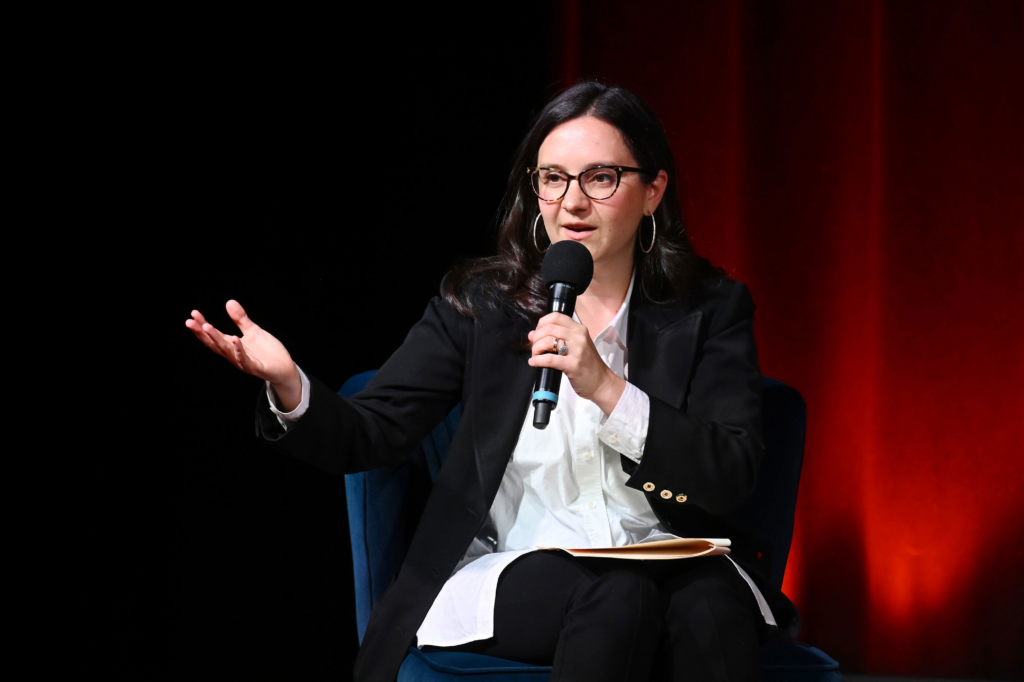
That is precisely why the last-minute decision to pull the segment has struck such a nerve. For Alfonsi, the move crossed a fundamental line. In her view, once a story has met every internal requirement, removing it can no longer be credibly framed as an editorial judgment call. Instead, she argues, it becomes something far more troubling: a political decision. That accusation has reverberated throughout CBS News, forcing colleagues to confront uncomfortable questions about who ultimately controls what reaches the public.
The subject of the report—El Salvador’s CECOT mega-prison—is itself highly charged. Built under President Nayib Bukele’s aggressive security policies, the facility has drawn international attention for its scale, secrecy, and alleged human rights violations. Critics say it represents a model of mass incarceration with little transparency or due process, while supporters argue it has dramatically reduced gang violence. Reporting on CECOT inevitably lands in a political minefield, particularly in the United States, where debates over crime, immigration, and authoritarian governance are deeply polarized.
Yet Alfonsi maintains that the story was not advocacy, but accountability journalism. Her reporting, she says, focused on documented allegations, firsthand accounts, and verified evidence—exactly the kind of rigorous investigation 60 Minutes has been known for over half a century. If such a story can be shelved despite clearing every editorial and legal hurdle, many inside the newsroom are asking what standard, if any, truly governs the final decision.
CBS leadership has offered little public explanation, a silence that has only fueled speculation. In the absence of transparency, journalists are left to wonder whether unseen pressures—political sensitivities, corporate risk calculations, or fear of backlash—played a decisive role. Alfonsi’s note to colleagues reportedly gave voice to a concern many share but rarely articulate: that the firewall between journalism and institutional power may be eroding quietly, decision by decision.
Supporters of CBS management argue that editorial discretion does not end with legal clearance. News organizations routinely delay, revise, or reconsider stories based on timing, context, or broader strategic concerns. From this perspective, pulling a segment is not inherently censorship; it can be an exercise of caution. But Alfonsi’s challenge cuts deeper. If the story was accurate, fair, and legally sound, what justification remains for withholding it from viewers?
The episode has exposed a fault line within legacy media organizations. On one side are journalists whose primary loyalty is to the public’s right to know. On the other are corporate entities navigating a volatile political environment, shrinking trust in media, and constant accusations of bias from all directions. When those priorities collide, reporters often feel the impact first.
Beyond CBS, the controversy resonates across the journalism industry. It highlights a growing fear that some of the most consequential editorial decisions now happen off-camera and behind closed doors. Viewers see what airs, but rarely what doesn’t—or why. When stories disappear without explanation, it raises a troubling possibility: that the absence of reporting can be as influential as its presence.
For many journalists, the most alarming aspect of the incident is not the single segment itself, but the precedent it may set. If a story can be fully vetted and still be killed, what message does that send to reporters pursuing difficult, politically sensitive investigations? Does it encourage self-censorship long before a story reaches the editing room?
Alfonsi’s willingness to speak out has transformed an internal decision into a public reckoning. Her accusation forces CBS News—and the broader media landscape—to confront a hard truth. Trust in journalism depends not only on accuracy, but on independence. When audiences suspect that stories are shaped or suppressed by political considerations, confidence erodes, regardless of how careful the reporting may be.
In the end, the controversy may be less about a prison in El Salvador than about the fragile boundary between journalism, power, and politics. That boundary is rarely crossed in dramatic fashion; more often, it shifts quietly, justified by prudence or discretion. Alfonsi’s stand has made that shift visible, and in doing so, has posed a question that lingers long after the segment itself vanished: in today’s media environment, who truly decides what the public gets to see—and at what cost?