d+ She Tried to Lock the Door: The 12-Year-Old Who Chose Courage as Gunfire Echoed Through Her School

When the first shots rang out, chaos took over the hallways. Students ran. Teachers shouted. Somewhere between fear and instinct, 12-year-old Maya Gebala made a split-second decision that would change her life — and define it.
She didn’t run.
Instead, Maya rushed toward the library door, determined to lock it and shield her classmates from the gunfire erupting just outside. It was the kind of choice that happens in a heartbeat, before fear has time to fully settle in. A choice rooted not in calculation, but in courage.
The lock failed.
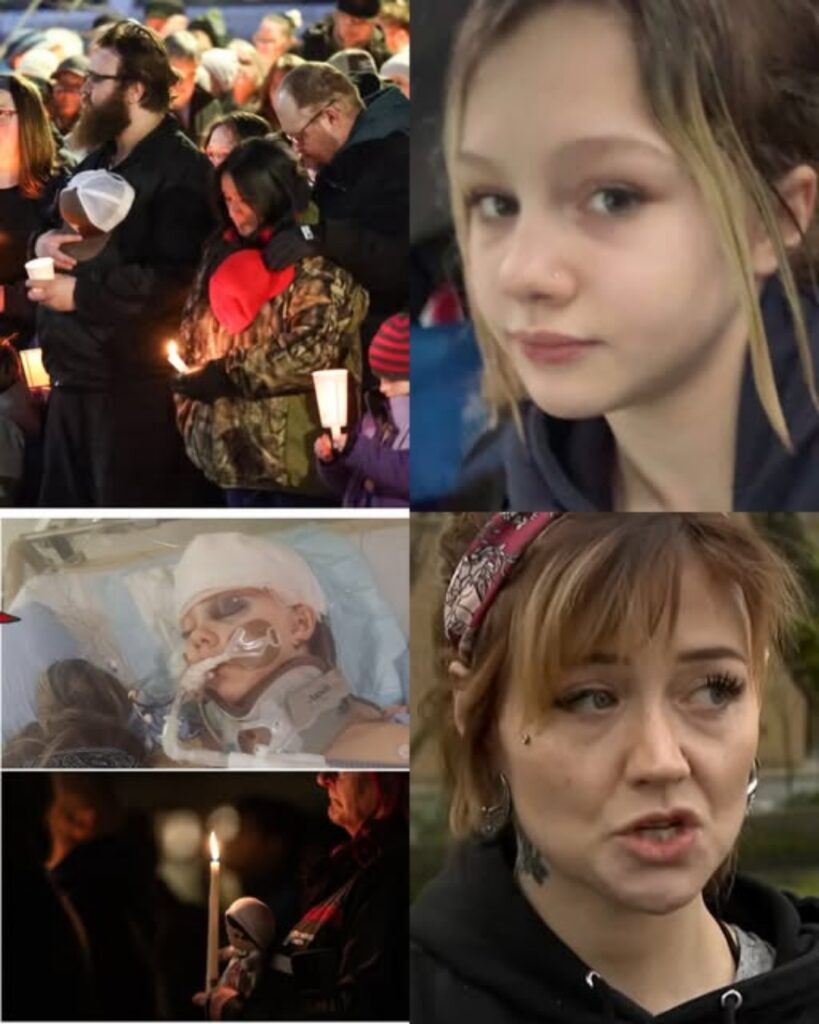
Seconds later, Maya was struck by bullets to the head and neck. Within hours, she was placed into a medically induced coma. Doctors worked through the night, unsure whether she would survive until morning. As her family gathered in stunned silence at the hospital, eight other families were confronting an unthinkable reality: their loved ones would not be coming home.
Now, Maya is fighting for her life.
In the sterile quiet of the intensive care unit, machines hum steadily beside her hospital bed. Tubes and monitors track every fragile sign of life. Physicians have been cautious in their updates, emphasizing the severity of her injuries and the uncertainty that lies ahead. The first night was critical. Every hour mattered.
Against the odds, she made it through.
Her mother has not left her side.
“She’s my climber. My hockey star,” she said softly, her voice carrying both pride and disbelief. Those who know Maya describe her as energetic, determined, and fiercely loyal to her friends. She’s the kind of child who scales playground structures without hesitation and chases down pucks on the ice with fearless intensity. Courage, it seems, has always been part of her makeup.
But nothing in her young life could have prepared her for that moment in the library.
According to witnesses, as panic spread through the school, students scrambled for safety. In the confusion, Maya moved toward the library entrance, trying to secure it before the threat could reach those inside. It was not a rehearsed act. It was instinct — a reflex to protect.
When the locking mechanism failed, there was no time left.
The violence that followed lasted only moments, but its impact will echo for years. Eight lives were lost that day. Eight families now navigate grief measured not in days, but in empty bedrooms and unfinished conversations. Their names are spoken in vigils lit by candlelight, in prayers whispered across kitchen tables, and in a community struggling to comprehend how such tragedy could unfold within the walls of a school.
For Maya’s family, the grief is tangled with uncertainty.
Doctors have explained that injuries to the head and neck carry immense risks. Swelling, bleeding, and neurological damage complicate every prognosis. The medically induced coma is meant to give her brain and body the best possible chance to heal. But recovery, if it comes, will likely be long and unpredictable.
Friends and neighbors have rallied around the family. Messages of support pour in daily. Flowers line the front steps of the hospital entrance. At school, classmates leave handwritten notes filled with hopeful promises: “Come back soon.” “We’re waiting for you.” “You’re our hero.”
Hero.
It’s a word that has followed Maya since that day. Yet those closest to her say she would never see herself that way. She would likely shrug it off, lace up her skates, and ask when practice starts again.
Still, her actions have forced an entire community to confront a powerful truth: in moments of terror, courage can come from the smallest among us.
Law enforcement officials continue to investigate the circumstances surrounding the shooting, piecing together timelines and reviewing security footage. School administrators face difficult questions about safety protocols, emergency preparedness, and whether anything more could have been done. In press briefings, officials speak carefully, aware that every word lands heavily on grieving families.
But beyond policy debates and investigative reports, one image remains fixed in the public’s mind — a 12-year-old girl choosing to stand between danger and her classmates.
In hospital corridors, hope rises and falls with each medical update. There are moments of guarded optimism, followed by reminders of how fragile her condition remains. Doctors have been clear: survival is only the first step. What follows could involve months, even years, of rehabilitation.
Her mother, however, refuses to let fear define the narrative.
“She’s a fighter,” she says. “She’s always been a fighter.”
It is a sentiment echoed by teachers who remember Maya volunteering to help younger students, by teammates who recall her diving for the puck without hesitation, and by friends who describe her as the one who always made sure no one felt left out.
In the darkest moment of her young life, Maya chose to act — not for recognition, not for praise, but for others.
Whether that same courage will carry her through the uncertain road ahead is a question no doctor can answer. Medicine will do what it can. Surgeons, nurses, and specialists will continue their vigilant watch. The community will continue to pray, to hope, to believe.
For now, the machines keep humming. The monitors keep blinking. And a 12-year-old girl who once tried to lock a door to save her classmates continues her quiet battle inside a hospital room.
Her story is not finished.
It is paused — suspended between heartbreak and hope, between what was lost and what might still be regained.
And as long as she keeps fighting, so will everyone who knows her name.