d+ Lightning Struck Twice: Two Linemen, One Storm, and the Quiet Courage Powering a Community

In the days after a brutal ice storm swept through Louisiana, darkness settled in more ways than one. Power lines sagged under frozen weight, neighborhoods went cold, and thousands of families waited—impatiently, anxiously—for the lights to come back on. They did not see the men rising in buckets before dawn, climbing into wind and ice to restore a sense of normalcy. They rarely do. But this time, the storm did not take just trees and transformers. It nearly took two lives.
The lineman community was already holding its breath for Hunter Alexander, a 24-year-old Entergy lineman electrocuted while restoring power in Louisiana. His injuries were catastrophic, the kind that change the shape of a life in an instant. As Hunter fought for survival in a Shreveport ICU—his family bracing for the possibility that he might lose both arms—another call came in. Another lineman. Another shock. Another family suddenly living minute to minute.
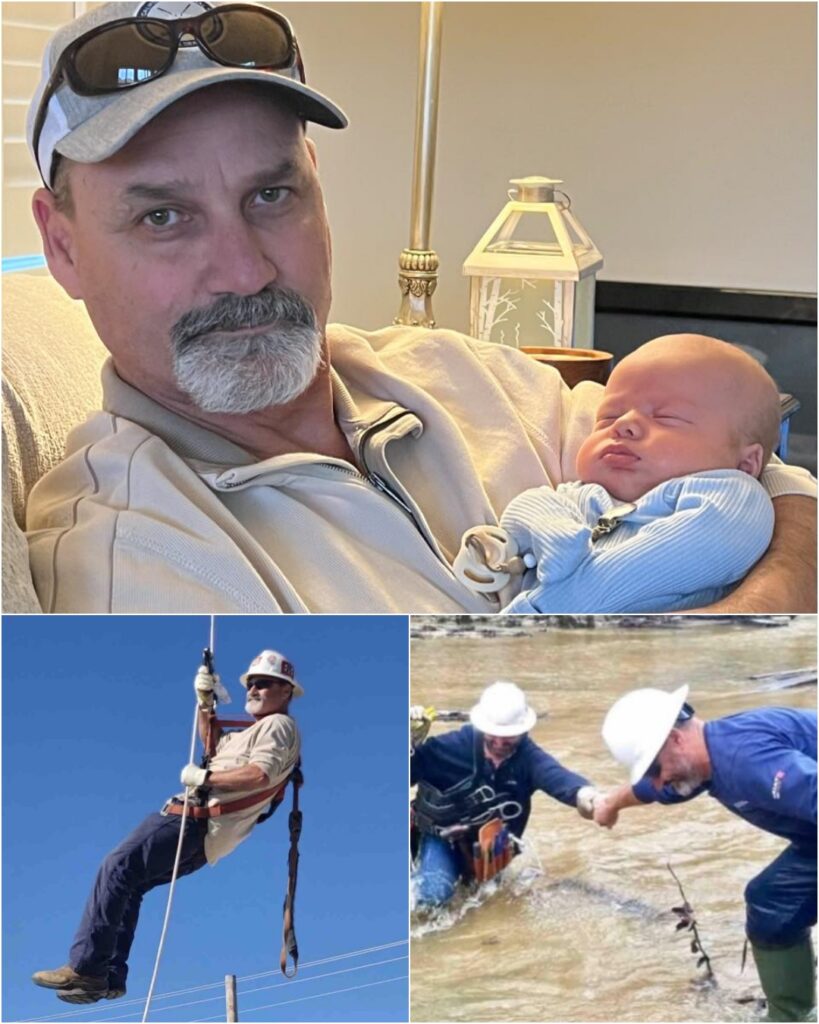
Just days after Hunter’s accident, Denny McGuff was electrocuted while working to restore power for thousands still devastated by the same storm. He was rushed to UAB Hospital in Birmingham, where doctors fought to save his life. His left arm was already partially amputated. He remains in critical but stable condition, facing a long and uncertain road ahead.
To those inside the trade, it felt like lightning striking twice.
Both men were doing the same thing when everything went wrong: climbing into buckets to bring light and heat back to strangers. Both were working in dangerous conditions that demanded precision and courage. And in both cases, a powerful electric shock tore through their bodies, collapsing the thin line between routine work and life-altering trauma.
People who know the McGuff family describe them in familiar terms—generous, steady, the kind who would do anything for anybody. The same words have been used again and again to describe Hunter Alexander. These are not outliers in the lineman world; they are the standard. It is a profession built on quiet service, on showing up when conditions are worst and risk is highest.
Now, both families are living the same nightmare. Days are measured in surgeries and updates from doctors. Nights stretch endlessly beside hospital beds. There are no clear answers, only probabilities and warnings. For Denny, the loss of his left arm is already a reality. For Hunter, who has miraculously made it through multiple surgeries without losing his arms so far, doctors are still cautioning that the risk of further amputation remains very real.
There have been moments of hope. Hunter has been taken off the ventilator. He is talking. Those small victories matter more than most people will ever understand. They are the kind of milestones families cling to when the future feels impossibly fragile. But hope, in these situations, is not a finish line—it is a daily decision.
As the medical battles continue, another reality presses in: the cost. ICU care, repeated surgeries, long rehabilitation, and months—possibly years—of lost income are overwhelming even for the most prepared families. For the McGuffs, help arrived swiftly from within the very community Denny has long served. A GoFundMe organized by his best friend, Kristy Morgan, has already raised more than $185,000 toward a $300,000 goal. The funds are intended to help cover medical expenses and support the family through what could be an extended recovery.
The response has been deeply personal. Linemen across states and companies have shared Denny’s story, passing the link along with notes that speak volumes: “One of ours.” The same network that rallied around Hunter Alexander has expanded, lifting up Denny McGuff as well. In a profession where trust is built hundreds of feet in the air, solidarity runs just as high.
These stories force a difficult reckoning with how society views essential work. When storms hit, the expectation is immediate: restore power, restore normal life. The danger involved is often invisible, assumed rather than understood. Linemen accept that risk as part of the job, but accidents like these expose the human cost behind every flipped switch and glowing porch light.
For Hunter and Denny, the storm is far from over. Recovery will not be linear. There will be setbacks, hard decisions, and moments when progress feels painfully slow. Yet even now, their stories are shaping something larger than individual tragedy. They are reminding communities who keeps the lights on—and what it can cost.
If you have been following Hunter Alexander’s journey, there is now another name to hold close: Denny McGuff. Add him to your prayers, your thoughts, your conversations. These men climbed into buckets during the worst conditions so others could have heat, light, and safety. They did it without headlines, without hesitation.
And it nearly cost them everything.