d+ A Quiet Hero on the Line: Inside the Fight for Hunter Alexander’s Life After a Devastating Electric Shock

In the freezing aftermath of a violent ice storm, while most people waited anxiously for the lights to come back on, 24-year-old lineman Hunter Alexander was already high above the ground, doing what he had been trained to do — restore power and keep communities alive.
What happened next would change his life forever.
A sudden, powerful electric shock tore through Hunter’s body, throwing him into a fight not only against catastrophic injuries, but against the very real possibility that he might lose his arms — or his life. Within moments, the routine dangers of line work turned into a medical emergency of the highest order.
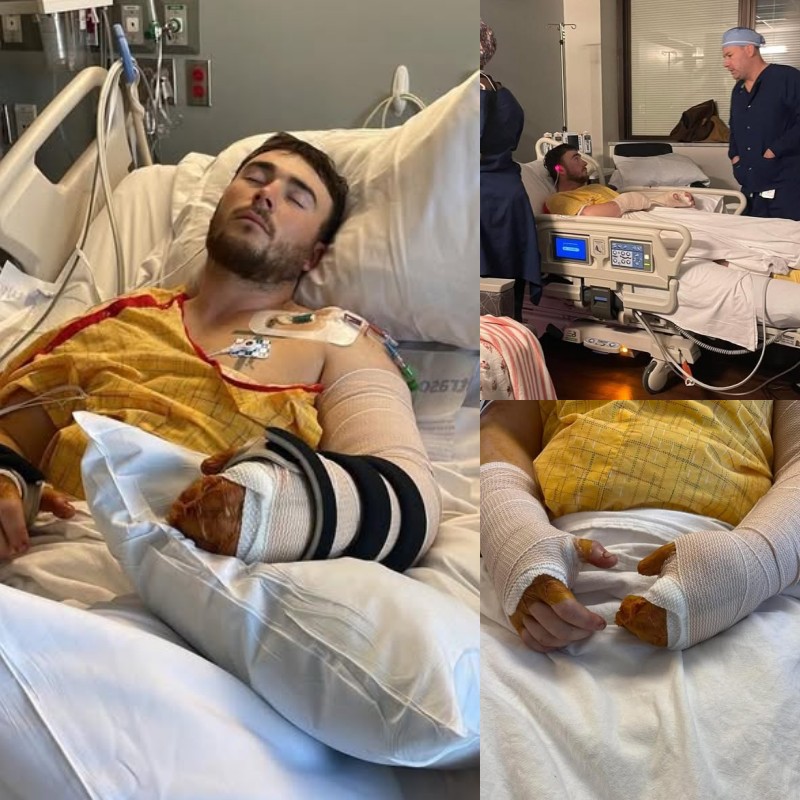
Today, Hunter remains hospitalized in Louisiana, enduring a long and uncertain recovery marked by repeated surgeries, severe burns, and relentless pain. Yet amid the fear and trauma, doctors say something remarkable has happened: amputation has been avoided once again.
A Routine Call Turns Catastrophic
Ice storms are among the most dangerous weather events for power infrastructure. Heavy ice coats lines and poles, bringing them down without warning and leaving entire regions in darkness. Linemen are often dispatched under extreme conditions — cold, wind, unstable equipment — because delays can mean life-threatening consequences for hospitals, families, and emergency services.
Hunter was responding to one of those calls.
Details surrounding the exact moment of the incident remain limited, but the result was unmistakable. The electric shock Hunter sustained was immense, causing severe burns and extensive damage to his arms and hands, the very tools of his trade. Emergency crews rushed him to the hospital, where doctors quickly realized they were facing a complex, high-risk situation.
Electrical injuries are among the most difficult traumas to treat. Unlike surface burns, electricity travels through the body, destroying tissue, nerves, and blood vessels from the inside out. Damage is often worse beneath the skin than it appears on the surface, and complications can emerge days or even weeks later.
A Race Against Time in the Operating Room
Since his admission, Hunter has been returned to surgery multiple times. Each procedure carries its own risks, and each decision forces doctors to weigh the limits of what can be saved.
According to medical updates, major nerves and blood vessels in Hunter’s arms remain intact — a critical factor that has allowed surgeons to avoid amputation so far. This alone is considered a significant and hopeful development given the severity of his injuries.
But the road ahead is far from easy.
Hunter faces additional surgeries and extensive skin grafts, procedures that will be physically exhausting and emotionally draining. Recovery from electrical burns is not measured in days or weeks, but often in months or years. Pain management, infection prevention, and long-term rehabilitation will all play a role in determining what his future looks like.
Doctors describe his condition as serious but stable, emphasizing that progress is being made carefully, step by step.
Strength Beyond the Injuries
Those closest to Hunter say what stands out most is not just his physical endurance, but his mindset.
Despite the pain — pain that can be difficult even to imagine — Hunter has remained strong, focused, and determined. Hospital staff and loved ones describe a young man who refuses to give up, even when the path forward is uncertain.
That resilience matters.
Studies show that psychological strength can play a critical role in recovery from severe trauma. For Hunter, that strength seems rooted in the same sense of duty that put him on the line during the storm in the first place — a quiet commitment to doing his job, no matter the risk.
The Hidden Cost of Keeping the Lights On
Hunter’s story shines a light on a reality that often goes unnoticed. When power is restored after a storm, the relief is immediate — but the dangers faced by the people who make that possible are rarely seen.
Lineman work consistently ranks among the most dangerous professions in the United States. High voltage, extreme weather, long hours, and physical exhaustion combine to create conditions where a single mistake — or a single unpredictable failure — can have devastating consequences.
Hunter did not seek attention or recognition. He was simply doing what thousands of linemen across the country do every day: putting themselves in harm’s way so others can stay warm, connected, and safe.
A Community Holding Its Breath
As Hunter continues his recovery in Louisiana, messages of support have poured in from fellow linemen, friends, and people who have never met him but feel connected to his story.
Many have referred to him as a “quiet hero” — someone who stepped into danger without fanfare and paid a heavy price for it. Prayers, well wishes, and words of encouragement have become a source of strength for his family as they navigate the uncertainty of what comes next.
For now, doctors remain cautiously optimistic. The fact that amputation has been avoided again is a victory — but one that comes with the understanding that more challenges lie ahead.
Looking Forward, One Day at a Time
No one can say with certainty what Hunter Alexander’s future will look like. His recovery will demand patience, resilience, and continued medical care. It will test his body and spirit in ways few people ever experience.
What is clear, however, is this: Hunter is still fighting.
And in that fight, he carries with him the respect and gratitude of a community that now understands the true cost of keeping the lights on.
As he remains hospitalized and prepares for the next stage of treatment, many are asking for the same simple thing — keep Hunter in your prayers. Not because he asked for recognition, but because heroes like him remind us how fragile our comforts really are, and how much courage it takes to protect them.