
If you think a starring role on a hit HBO series is an automatic golden ticket to a life of leisure, Sydney Sweeney has a reality check for you. In a series of refreshingly blunt admissions, the Euphoria and The White Lotus star has pulled back the velvet curtain on the financial machinery of modern stardom.
The takeaway? Even when you’re the most talked-about face on television, the math doesn’t always add up the way fans imagine. It turns out that in the age of streaming and social media, “making it” in Hollywood looks less like a permanent vacation and more like a high-stakes, never-ending hustle.
The 20% Tax on Talent
One of the most eye-opening revelations from Sweeney is the staggering overhead required to simply be a working actress. The paycheck you see reported in trade magazines isn’t what hits the bank account.
Before a single dollar goes toward her mortgage or groceries, a massive slice of the pie is claimed by the “team” required to keep the engine running. Sweeney broke down the grim arithmetic:
- 10% to agents
- 5% to lawyers
- 3% to business managers
- Monthly fees for publicists that, in her words, “cost more than my mortgage.”
Add in the specialized costs of “image maintenance”—stylists, hair and makeup for press tours, and travel—and the net profit begins to shrink rapidly. For Sweeney, these aren’t luxuries; they are professional requirements in an industry that demands a flawless public persona.
The Death of the Residual
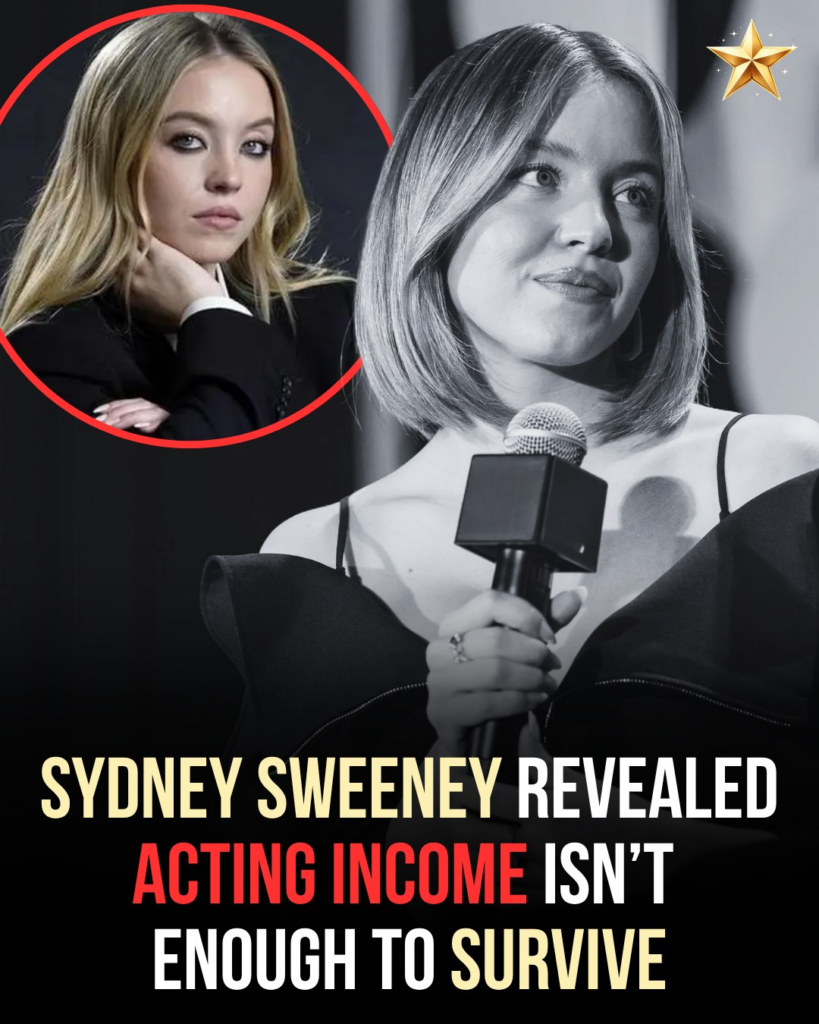
Twenty years ago, a star on a hit show could live comfortably for years on residuals—those royalty checks that arrive every time an episode is syndicated or re-run on cable. In the streaming era, that safety net has largely evaporated.
“They don’t pay actors like they used to, and with streamers, you no longer get residuals,” Sweeney told The Hollywood Reporter.
While legacy stars may still command massive back-end deals, the new generation of talent is paid a flat fee. Once the production wraps, the income stream stops. For Sweeney, this means she can’t afford to “shut it down” for six months to recharge. Without a constant stream of new projects, the bills—and the overhead of her professional life—would quickly outpace her savings.
Brand Deals: A Survival Strategy, Not a Vanity Project
If you’ve noticed Sweeney appearing in high-profile campaigns for Miu Miu, Armani Beauty, or Laneige, don’t assume it’s just about the glamour. She has been candid about the fact that these partnerships are a financial necessity.
“If I just acted, I wouldn’t be able to afford my life in L.A.,” she admitted. The brand deals provide the liquidity that acting roles, despite their prestige, often lack. They fund the very lifestyle and public image that allow her to stay relevant enough to book the next “prestige” acting gig. It’s a cyclical, high-pressure ecosystem where every move must be monetized.
From Ground Zero to the Hollywood Hills
Part of Sweeney’s frustration stems from her “ground zero” beginnings. Unlike the “nepo babies” who enter the industry with a financial cushion and established connections, Sweeney’s family moved to L.A. when she was 13, at one point living out of a single motel room to support her dream.
That history of financial insecurity clearly colors her current perspective. Even with a reported net worth in the millions and a home in the Westwood neighborhood, the fear of “the money running out” remains a powerful motivator.
The Human Cost of the Hustle
This constant pressure to work has a physical and mental toll. Sweeney has spoken openly about experiencing burnout and panic attacks, noting that the fear of losing relevance drives her to work at a pace that is often unsustainable.
Her transparency serves as a vital reminder to fans: Success is not a destination; it’s a high-maintenance machine. Behind every red-carpet photo is a complex ledger of expenses, a team of paid professionals, and a young woman who—despite the Emmy nominations—is still checking her budget every month.
Sydney Sweeney isn’t asking for pity, but she is demanding a more honest conversation. In an industry built on illusions, her financial candor might be her most “real” performance yet.
Would you like me to adapt this into a shorter social media thread or perhaps a script for a video essay?