f.The “Bicep Reload” That Fooled Millions: How an Accidental Moment Became One of Action Cinema’s Most Iconic Moves.f

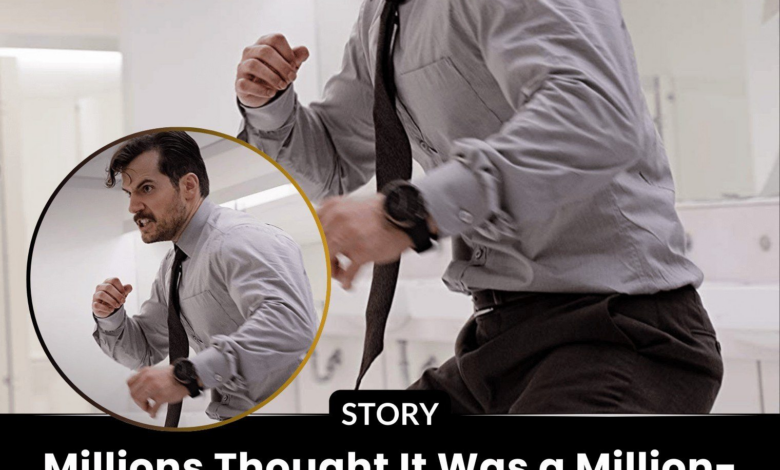
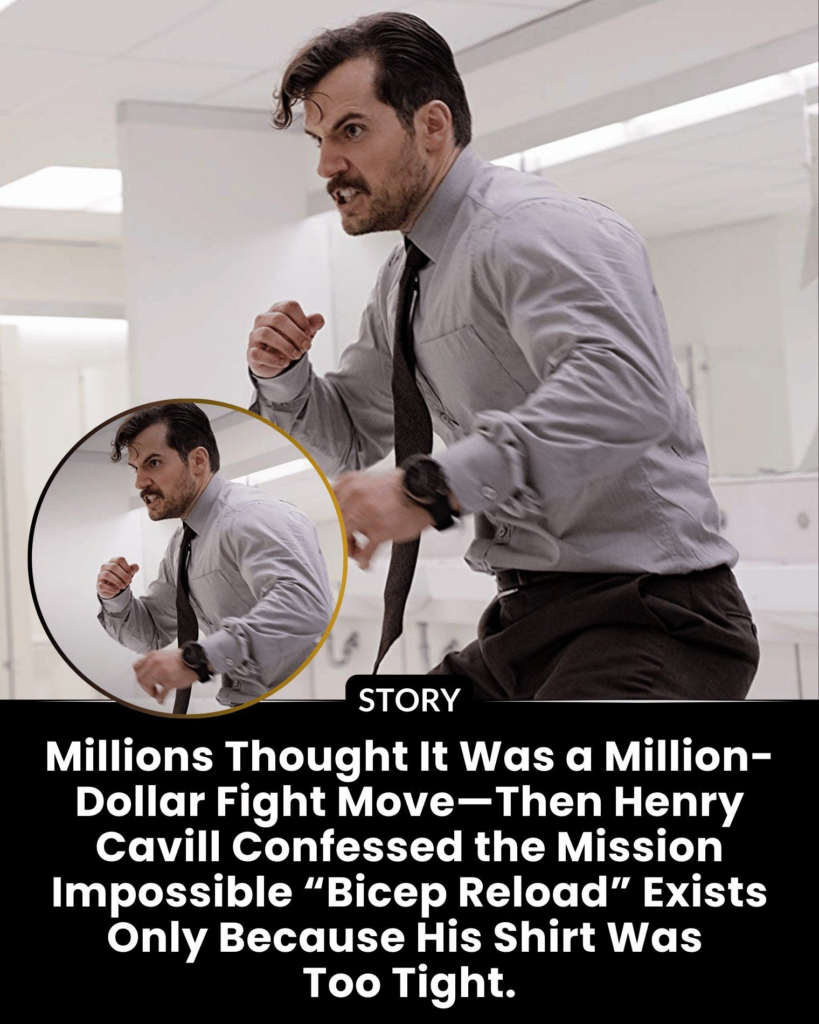
For years, audiences were convinced they had witnessed a masterclass in cinematic choreography—a subtle yet electrifying gesture that seemed to redefine on-screen combat. In the now-famous bathroom fight scene from Mission: Impossible – Fallout, Henry Cavill’s character, August Walker, pauses for a split second, rolls his shoulders, and appears to “reload” his fists before launching back into the fight. The moment was sharp, deliberate, and strangely hypnotic. Fans gave it a name: the “Bicep Reload.”
It didn’t take long for the internet to erupt. Slow-motion breakdowns flooded YouTube. Fitness enthusiasts analyzed the muscle movement. Martial arts forums debated its practicality. Memes spread across social media, turning Cavill’s brief motion into a symbol of raw power and calculated aggression. Some even claimed it was one of the coolest improvised fight techniques ever captured on film.
But the truth behind the moment is far less glamorous—and arguably far more fascinating.
In later interviews, Henry Cavill revealed that the now-iconic “Bicep Reload” wasn’t a choreographed move at all. There was no hidden fighting technique, no deliberate acting choice meant to intimidate an opponent. Instead, the gesture came from a much more mundane—and uncomfortable—reality: his suit was too tight.
Cavill explained that the bespoke suit he wore during filming restricted his movement, particularly around the shoulders and underarms. As the physically demanding fight sequence progressed, the discomfort became increasingly noticeable. The now-famous motion? It was simply Cavill instinctively adjusting his jacket, trying to relieve the pressure in his armpits before continuing the scene.
That’s it. No symbolism. No strategy. Just an actor trying not to be distracted by a painfully tight costume.
And yet, somehow, that accidental adjustment transformed into one of the most talked-about action moments of the decade.
The bathroom fight in Fallout was already designed to be visceral and grounded. Unlike many modern action scenes that rely heavily on rapid cuts and visual effects, this sequence leaned into physicality—long takes, brutal impacts, and a sense of real weight behind every punch. Cavill’s imposing presence, combined with Tom Cruise’s relentless intensity, created a scene that felt both chaotic and meticulously controlled.
Within that context, the “Bicep Reload” landed perfectly. It looked intentional. It looked powerful. It looked like a man resetting himself mid-fight, preparing to unleash something even more devastating. The audience didn’t question it—they embraced it.
This phenomenon highlights something deeper about how viewers engage with film. Audiences are not just passive observers; they are active interpreters. When presented with a striking visual moment, especially one that fits the tone and energy of a scene, people naturally assign meaning to it. In this case, a simple wardrobe adjustment became a symbol of dominance, readiness, and controlled aggression.
It also speaks to Cavill’s physical performance. Even when he wasn’t consciously “acting” in that specific moment, his presence and body language were so aligned with the character that the gesture felt authentic. It blended seamlessly into the choreography, reinforcing the illusion that everything on screen was deliberate.
Interestingly, the accidental nature of the move may have contributed to its effectiveness. In action filmmaking, there is often a fine line between choreography and spontaneity. When everything is too polished, it can feel artificial. But moments that appear slightly imperfect—or unexpectedly human—can add a layer of realism that resonates more deeply with audiences.
The “Bicep Reload” sits right in that space. It wasn’t designed to impress, which may be exactly why it did.
The story also underscores the unpredictable nature of filmmaking. Directors, stunt coordinators, and actors can spend weeks planning a sequence down to the smallest detail, yet it is sometimes the unplanned moments that leave the biggest impact. A glance, a stumble, a slight hesitation—these can become the elements that audiences remember long after the credits roll.
In Cavill’s case, what began as a minor discomfort ended up defining his character in the eyes of many viewers. August Walker became synonymous with brute strength and calculated menace, and that brief motion played a significant role in shaping that perception.
Of course, the revelation that the move was accidental hasn’t diminished its popularity. If anything, it has added another layer to the story. Fans now view the “Bicep Reload” with a mix of admiration and amusement. It’s a reminder that even in big-budget Hollywood productions, not everything is as meticulously crafted as it seems.
And yet, the myth persists.
Even after Cavill’s explanation, some fans remain skeptical. Was it really just an adjustment? Could there have been some subconscious intention behind it? Or has the actor simply downplayed the moment’s significance? The debate continues, fueled by the same curiosity that made the scene go viral in the first place.
Ultimately, the “Bicep Reload” represents more than just a single moment in a fight scene. It’s a case study in how meaning is created—not just by filmmakers, but by audiences themselves. It shows how quickly a small detail can take on a life of its own, evolving from a practical necessity into a cultural phenomenon.
In an industry where so much effort is put into controlling every frame, there’s something refreshing about that.
Because sometimes, the most unforgettable moments aren’t planned. They aren’t scripted. They aren’t even intentional.
Sometimes, they happen because a suit is just a little too tight—and an actor, in the middle of a fight, simply needs to breathe.