qq A sudden clash in the music world is sending fans into a frenzy after comments from Jack White about Taylor Swift sparked a massive online debate.

The Spark In The Digital Tinderbox
In the hyper-connected landscape of 2026, a single sentence can ignite a global wildfire. This is exactly what happened to rock icon Jack White on March 8, 2026. While promoting his new book on lyrics and poetry in an interview with The Guardian, the former White Stripes frontman shared his personal philosophy on songwriting. However, a brief mention of Taylor Swift’s autobiographical style was quickly stripped of context, rehashed by clickbait sites, and served to the world as a direct insult.
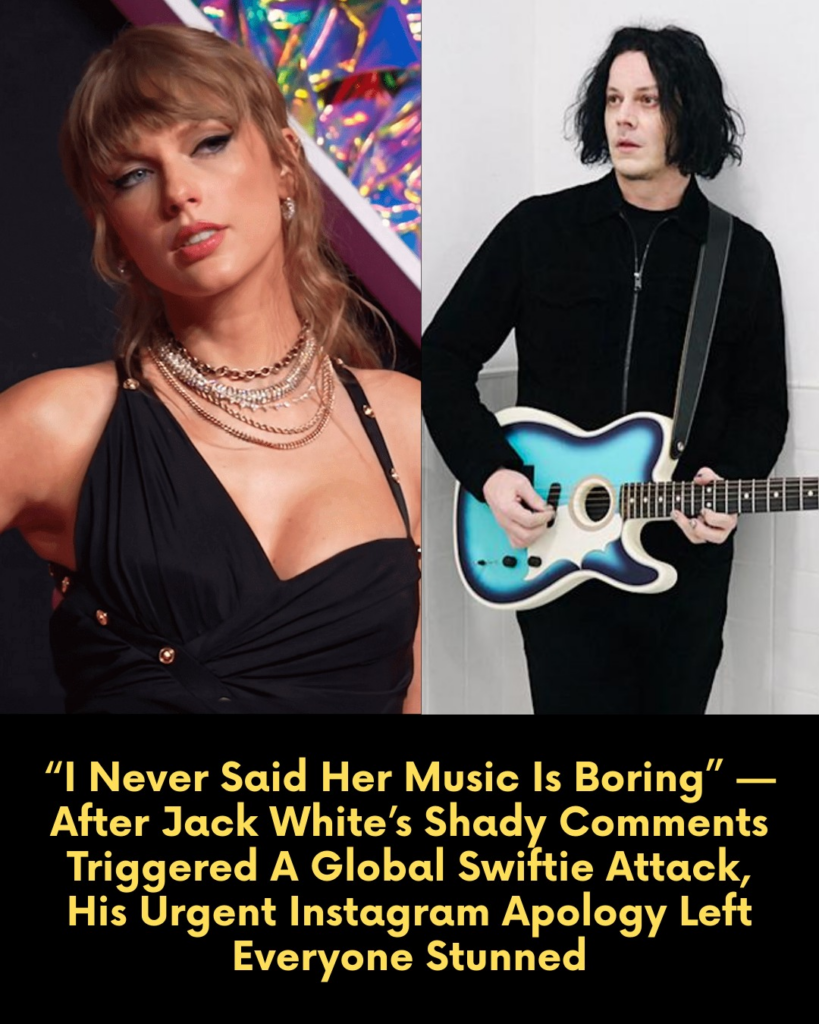
The headline that dominated feeds was brutal: “Jack White Calls Taylor Swift’s Music Boring.” Within minutes, the Swifties—perhaps the most formidable and protective fandom in music history—launched a massive digital counter-attack. Accusations of “clout-chasing” and “misogyny” flooded White’s social media, creating a PR crisis that threatened to overshadow his entire literary launch. But Jack White isn’t one to hide behind a publicist’s pre-written statement.
The Misunderstood Quote
To understand the drama, one must look at what Jack White actually said. When asked if his own songs were autobiographical, he explained that he finds writing about his personal life “a bit boring” for his own creative process. He noted that while the “Taylor Swift style” of publicizing breakups is incredibly popular and successful, he personally prefers the mystery of fictional characters.
White’s point was about his own artistic boundaries—the desire to keep his private pain away from “fools on the internet.” He wasn’t attacking Taylor’s talent; he was defending his own need for privacy. Unfortunately, in the age of 280-character outrage, nuance is often the first casualty. The rock legend found himself painted as a villain in a story he never intended to write.
An Urgent Plea For Sanity
By March 10, the noise reached a deafening pitch. Jack White took to Instagram Stories to deliver a raw, unfiltered clarification. He didn’t just apologize; he dismantled the entire clickbait industry. “I didn’t say I think Taylor Swift’s music is ‘boring’ or whatever the online clickbait is trying to scavenge,” he wrote. His frustration was palpable, appearing as a man exhausted by the constant need to “avoid accidentally triggering nonsense.”
White went on to praise Taylor and other pop stars for their incredible ability to connect with millions of people. He made it clear that just because his creative path is different, it doesn’t mean he looks down on theirs. This wasn’t a forced corporate apology; it was a plea for fans to stop seeing “beef” where there is only a difference in artistic vision. He expressed a genuine happiness for Taylor’s success, reminding everyone that there is room for both the autobiographical and the imaginary in music.
The Death Of Artistic Reflection
The most heartbreaking part of White’s response was his reflection on the “chilling effect” this drama has on all artists. He admitted that incidents like this make him want to stop doing interviews altogether. When every thoughtful or romantic answer is twisted into a viral “diss,” artists are incentivized to give safe, boring, and hollow responses.
“This is when I have less and less interest in doing interviews,” White lamented. He warned that if we continue to punish artists for having unique perspectives, we will end up with a culture where no one shares anything interesting at all. He slammed “self-proclaimed editors” for prioritizing clicks over the “romance, passion, or reflection” that makes music journalism worth reading. For fans, this was a wake-up call: our obsession with “wins” in fandom wars might be killing the very honesty we love about our idols.
Fandom Loyalty vs. Media Manipulation
The Swiftie community is known for its incredible loyalty, but this incident highlights how that loyalty can be weaponized by predatory media outlets. By framing White’s creative preference as a “shady comment” toward Taylor, these outlets ensured millions of hits at the cost of the truth.
While some fans remained angry, many others began to see the bigger picture. They realized that Taylor Swift, a billionaire mogul and world-class songwriter, likely didn’t need protection from a rock musician’s opinion on his own writing style. The real enemy wasn’t Jack White; it was the digital machinery that profits from conflict. This realization has sparked a rare moment of introspection within the fandom, with many calling for a more “nuanced” approach to headlines in the future.
Moving Beyond The Clickbait
As Jack White eventually deleted his clarification to “end the matter,” the industry remains shaken. He has successfully cleared his name, but the scar of the “global attack” remains. He proved that he is not a “hater,” but a man who values the sacredness of the song above the noise of the internet.
The lesson of the Jack White and Taylor Swift drama of 2026 is a powerful one. It reminds us that art is diverse, and that a difference in style is not a declaration of war. As we move forward, the hope is that fans can appreciate the “Evermore” of Taylor’s storytelling while also respecting the “White Stripes” of Jack’s mystery. In the end, music is about connection, and Jack White’s emotional stand for the truth has finally made things right. The world may be obsessed with drama, but for Jack and Taylor, it will always be about the art.