d+ Turning Point USA Unveils How to Watch Its “All-American Halftime Show,” Setting the Stage for a Super Bowl Culture Clash

With less than a week remaining before Super Bowl LX, Turning Point USA has stepped into one of the most watched cultural moments in America and made its intentions unmistakably clear. As the NFL prepares to deliver its official halftime spectacle — headlined this year by global superstar Bad Bunny — the conservative organization has released full details on how viewers can watch what it calls the “All-American Halftime Show,” a faith- and patriotism-centered alternative designed to run alongside the league’s broadcast.
The announcement immediately ignited conversation online, not only because of its timing, but because of what it represents. Super Bowl halftime shows have long been more than entertainment; they are cultural statements, reflecting where mainstream America believes it is headed. By unveiling a parallel production, Turning Point USA is signaling that a significant portion of the audience feels that mainstream direction no longer speaks for them.
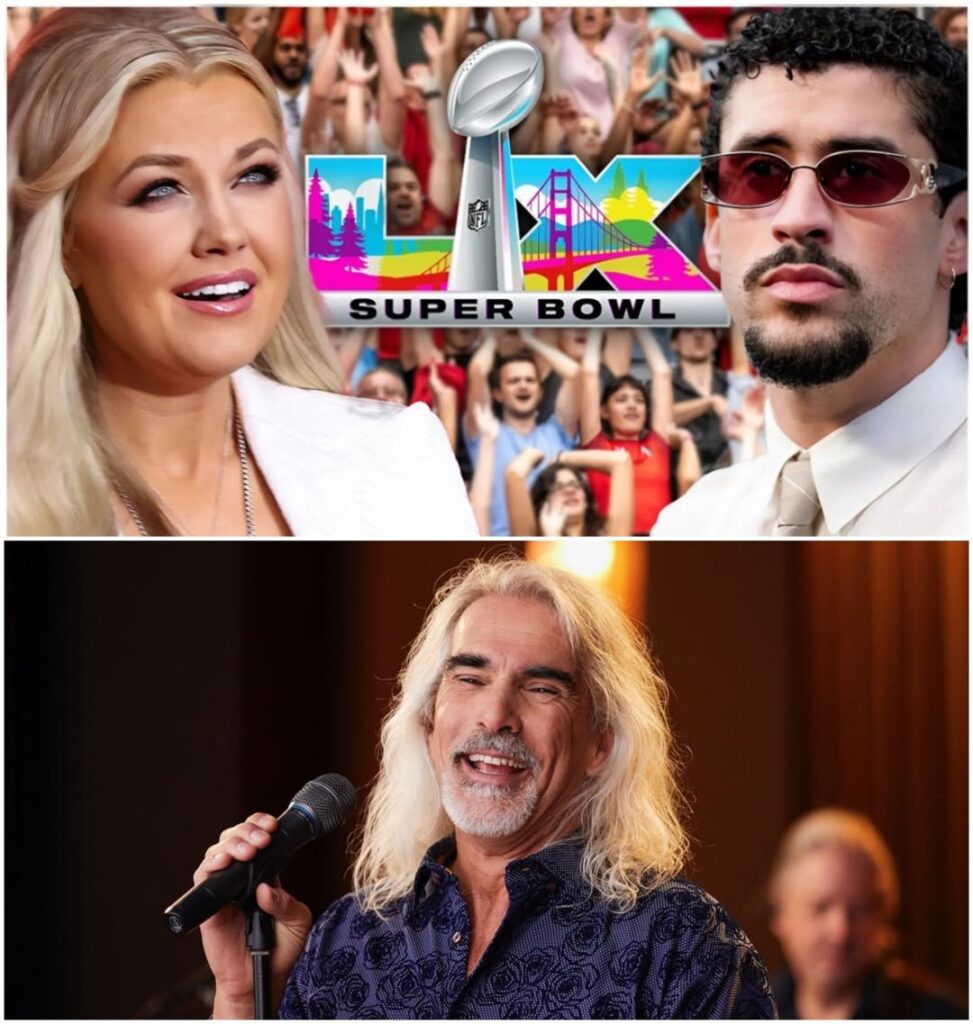
According to the group, the All-American Halftime Show will stream live across YouTube, X, and Rumble, while also airing on partner platforms including Daily Wire+, Trinity Broadcasting Network, Real America’s Voice, and additional conservative-leaning outlets. The wide distribution ensures that viewers won’t need cable credentials or niche subscriptions to tune in — a deliberate move that mirrors the accessibility of the NFL’s own broadcast.
At the center of the event is Guy Penrod, a Grammy-winning gospel singer whose career has been built on worship music, faith testimony, and a distinctly traditional American image. Penrod’s presence signals the tone of the program: worship-driven anthems, faith-forward messaging, and patriotic themes meant to contrast sharply with the pop-culture spectacle that has come to define Super Bowl halftime over the last decade.
Turning Point USA has framed the show not as a protest, but as an option. In its messaging, the group emphasizes choice — the idea that viewers can decide which vision of American culture they want to invite into their living rooms. Supporters argue that the NFL’s halftime performances have increasingly alienated faith-based and conservative audiences, leaving them feeling unseen during what is supposed to be a unifying national event.
Critics, however, see the move differently. Some accuse TPUSA of injecting politics into a space that should remain focused on sports and entertainment. Others question whether a counter-program can realistically compete with the scale, production value, and global reach of the NFL’s halftime show. Still, even skeptics acknowledge that the very existence of such an alternative underscores how fragmented the American cultural landscape has become.
This is not the first time Super Bowl halftime has been a flashpoint. From Janet Jackson’s 2004 “wardrobe malfunction” to recent performances celebrated by some and criticized by others for their political or social messaging, halftime has evolved into a cultural battleground. What makes this moment different is that, instead of merely reacting afterward, a group is actively offering a parallel broadcast — one that invites viewers to opt out in real time.
Turning Point USA, known primarily for its influence on college campuses and its large youth-focused media operation, appears to be testing a broader strategy. By aligning with major conservative platforms and religious networks, the organization is extending its reach beyond its usual audience, aiming for families, church communities, and viewers who may not normally engage with political activism but feel strongly about cultural representation.
The choice of streaming platforms is also telling. By prioritizing YouTube, X, and Rumble, TPUSA is leaning into decentralized media spaces where content is less tightly curated by traditional entertainment gatekeepers. Partnering with outlets like Daily Wire+ and Trinity Broadcasting Network further reinforces the idea that this is as much a media ecosystem play as it is a single event.
For Penrod, the moment represents something larger than a performance. In past interviews, he has spoken about music as a form of ministry and witness. Performing during the Super Bowl — even indirectly — places that mission on one of the largest stages imaginable. For fans, it offers a familiar voice during a moment that has increasingly felt unfamiliar.
Whether the All-American Halftime Show draws hundreds of thousands or only a fraction of the NFL’s audience, its symbolic impact is already clear. It reflects a growing willingness among ideological groups to build parallel cultural institutions rather than fight for space within mainstream ones. Instead of arguing over what the Super Bowl halftime should be, Turning Point USA is effectively saying: “We’ll show you what we think it should look like.”
As Super Bowl Sunday approaches, the conversation is no longer just about who will perform or how flashy the production will be. It is about values, representation, and choice. Viewers will decide in real time which screen they watch, which message they absorb, and which version of America they believe deserves the spotlight.
In that sense, the halftime moment this year may be more revealing than ever — not because of a single performance, but because of the growing divide it quietly puts on display.