d+ Doctors Are Still Fighting to Save Hunter Alexander’s Arms — The Unseen Cost of Keeping the Lights On During Disaster

When a brutal ice storm swept through the region, most people experienced it as an inconvenience—dark houses, silent heaters, a sudden reminder of how fragile modern comfort can be. For 24-year-old lineman Hunter Alexander, that storm became a fight for his life.
Just days ago, Hunter was doing what thousands of utility workers do without hesitation when disaster strikes: heading into dangerous conditions so others can stay warm, safe, and connected. Ice coated power lines. Winds cut through protective gear. The risk was understood—but unavoidable.
Then everything changed in an instant.
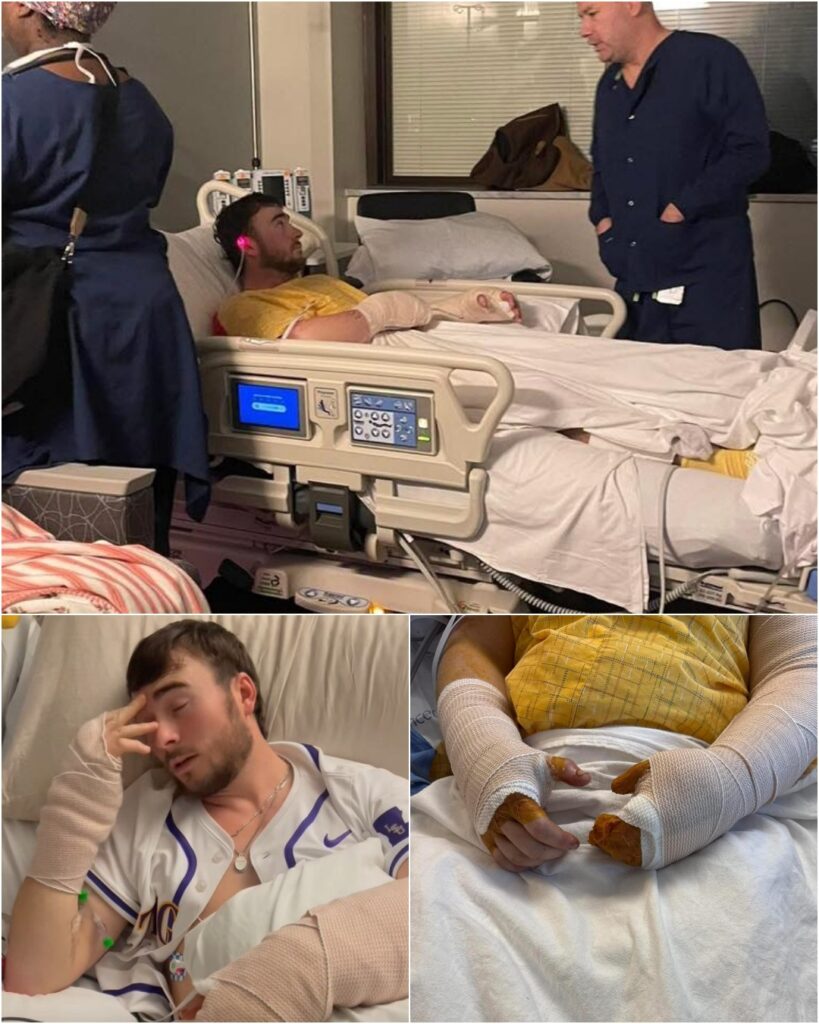
A powerful electric shock tore through Hunter’s body while he was on the job, inflicting catastrophic injuries to his arms and hands. He was rushed to a hospital in Louisiana, where he remains in the ICU. From the outside, his story could sound like another tragic workplace accident. But inside the hospital walls, a far more intense and ongoing battle is unfolding.
According to an update shared by his father, Daren Alexander, Hunter has already been back in surgery again—and the fight to save his arms is far from over.
A War Fought One Surgery at a Time
The most recent operation was painful and complex. Surgeons worked to remove damaged tissue from Hunter’s right thumb, left forearm, and wrist, carefully navigating injuries caused by high-voltage electrical burns—some of the most destructive trauma the human body can endure.
Electrical injuries don’t just burn skin. They travel through tissue, damaging muscles, nerves, and blood vessels from the inside out. Often, the full extent of the damage only reveals itself days later.
And yet, in a moment his family describes as nothing short of miraculous, doctors were once again able to avoid amputation.
Even more encouraging: surgeons confirmed that the major nerves and blood vessels in Hunter’s arms still appear intact. For anyone familiar with electrical burn injuries, that finding carries enormous weight. It means function may still be possible. It means hope is real.
“That alone feels like a miracle,” his father said.
But miracles don’t erase reality.
The Road Ahead Is Long — and Painful
Hunter’s injuries remain severe. Doctors have confirmed third-degree burns on his left forearm and wrist. He has open wounds, currently managed with wound vacuum systems designed to reduce infection and promote healing. Skin grafts will be necessary.
Most critically, this is not a single-surgery recovery.
Physicians expect Hunter will need two to three more operations in the coming days, each one aimed at saving as much healthy tissue as possible before irreversible damage sets in. The timeline is tight. The stakes are enormous. Every procedure is a balancing act between removing dead tissue and preserving what still has a chance to recover.
This is what survival looks like after an electrical injury—not a dramatic turning point, but a series of grueling, incremental battles.
Awake, Thinking Ahead — Even Through the Pain
Despite the trauma and relentless pain, Hunter’s mindset has stunned those around him.
He is awake. He is alert. And even now, he’s thinking forward.
As soon as a hospital bed becomes available, doctors plan to move him out of the ICU. And while many patients would understandably retreat inward under these circumstances, Hunter is doing the opposite—already figuring out how to stay connected to the people who matter to him.
He’s been talking about rigging a way to hold his phone, adapting to his injuries so he can continue communicating with friends and loved ones.
“That’s who he is,” his family says.
It’s a small detail—but it says everything.
The Hidden Cost of Disaster Response
When storms hit, we often praise first responders—and rightly so. But stories like Hunter’s reveal another group quietly standing in harm’s way: utility workers who restore power under conditions most people would never willingly enter.
They climb. They repair. They take risks measured not in headlines, but in human consequences.
Hunter stepped up without hesitation. He did his job so that strangers could have heat, light, and safety during one of the harshest weather events of the season.
Now, he’s paying the price.
“Your Prayers Are Helping More Than You Know”
Hunter’s family has been overwhelmed by the outpouring of support—but they say prayers have meant more than words can express.
“This is still a fight,” his father shared. “But please keep praying.”
There is no finish line yet. No guaranteed outcome. Only a young man enduring unimaginable pain with resilience—and a medical team working against the clock to give him the best possible chance at recovery.
In moments like this, encouragement matters. Faith matters. Community matters.
Hunter nearly gave everything so others wouldn’t be left in the dark.
If you could send him one message—one line of hope, strength, or gratitude—what would you say?
Because sometimes, the people who keep the lights on are the ones who need us to shine a little light back.