A social media storm erupted this week around what some are calling a “Super Bowl bombshell,” sending NFL fans into a frenzy — only for key parts of the story to quickly fall apart under scrutiny. What started as explosive speculation morphed into a case study in how quickly misinformation can spread in today’s sports media landscape.
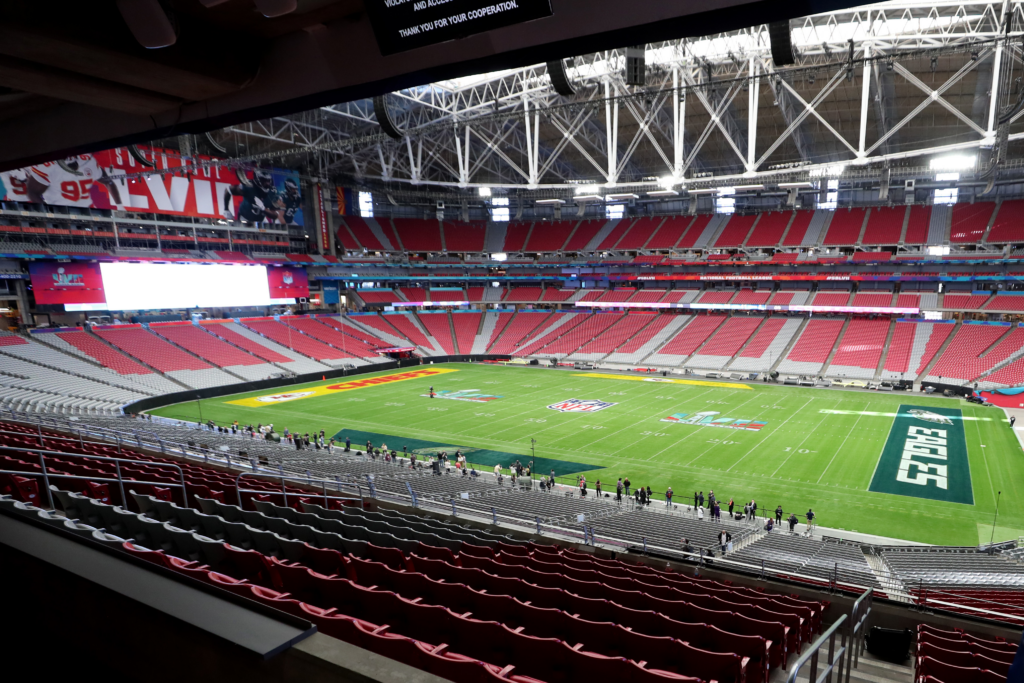
At the heart of the frenzy was a viral claim suggesting that the upcoming Super Bowl (scheduled to feature the New England Patriots and the Seattle Seahawks) was somehow “rigged” or “scripted” — that outcomes, even down to specific scores, had been pre-determined or leaked ahead of time, and that the league had responded with a bombshell clarification.
But while the claim gripped thousands of social media users and even influenced sportsbooks to see sudden activity on exact-score bets, closer examination shows that critical details don’t add up and much of the narrative is unfounded.
What Fans Saw Go Viral
An image purporting to show a future Super Bowl score — “Eagles 37, Chiefs 34” — circulated widely online, with users claiming it was an official “leak” or part of a supposed NFL script. Variants of the photo were shared millions of times, leading to a spike in online bets on that exact score long before kickoff.
The idea gained traction quickly, blending typical passionate fan discussion with conspiracy speculation. People who saw the image believed they were witnessing proof the game’s outcome was already known — a narrative that instantly spread across platforms like X (formerly Twitter) and Reddit.
League Quickly Pushes Back
The NFL has publicly denied any suggestion that games are predetermined. In statements responding to viral claims, league officials made it clear that the season’s championship is not scripted — and that game outcomes are based on athletic competition, not pre-written results or leaks.
Independent fact-checking organizations have also debunked similar “scripted game” claims in the past, calling such graphics misleading and unrelated to actual league data.
Why the Story Doesn’t Add Up
There are several reasons analysts and observers are skeptical of the viral “bombshell”:
- No credible source: The viral image did not come from any verified NFL or sports media accounts, only from user-generated social posts.
- Misleading context: Graphics claiming to predict or script scores often rely on old templates or fan edits, not insiders.
- Betting spikes don’t prove scripting: Sudden betting on exact scores is a common response to virality, not confirmation of accuracy.
- NFL statements reinforce competition: The league has consistently reiterated that outcomes are not predetermined.
In other words, the only real evidence supporting the scripting claim is that millions of people saw a shared image — not that any official outlet confirmed it.
The Viral Power of Conspiracy Sports Narratives
This isn’t the first time a Super Bowl or high-profile NFL game has generated outlandish theories. Fans have previously shared stories claiming the big game was predetermined, scripted, or rigged — only to have research and fact-checks debunk them.
Conspiracy-style narratives thrive in large part because the Super Bowl is one of the most watched sporting events in the world, and any claim tied to it is bound to spread quickly — especially with high emotional stakes, millions of dollars in betting, and passionate fanbases from coast to coast.
What Experts Are Saying
Sports analysts emphasize an important distinction: viral does not mean verified. Many narratives that capture attention online are designed to provoke engagement, not present truth.
Experts have pointed out that viral “proof” images often use doctored scoreboards, reused templates, or out-of-context material. The fact that a prediction goes viral says more about fan psychology and social media dynamics than anything about league intentions.
The Bigger Picture
Whether it’s a doctored image, an exaggeration, or a misunderstanding that got out of control, the bigger issue demonstrated by this viral moment is how quickly false or misleading narratives can shape public perception — especially when tied to something as monumental as the Super Bowl.
As fans prepare for one of the NFL’s biggest sporting events, it’s important to remember that excitement, speculation, and rumor will always follow the game, but that doesn’t mean every bombshell claim is backed by fact.
In a world where virality moves faster than verification, critical thinking matters more than ever — even amid the hype of championship Sunday.