
🚨 BREAKING — A New “All-American Halftime Show” Enters the National Conversation as Super Bowl 60 Approaches, and It’s Already Challenging How America Thinks About the Biggest Night in Sports
It didn’t debut during a playoff game.
It didn’t arrive with a flashy commercial.
And it certainly didn’t come from the NFL.
Yet in a matter of days, a newly announced broadcast called “The All-American Halftime Show” has pushed its way into the national conversation — precisely because it exists outside the traditional Super Bowl ecosystem.
The project was introduced quietly during The Charlie Kirk Show, where Turning Point USA, now operating under new leadership from Erika Kirk, confirmed plans to air a faith-driven, patriotic alternative program alongside Super Bowl 60. What followed wasn’t a viral stunt, but something arguably more powerful: sustained attention.
Supporters immediately framed it as overdue.
Critics labeled it disruptive.
Media insiders began asking questions — especially about how the broadcast will reach viewers.
And just like that, Super Bowl Sunday got more complicated.
What Is the All-American Halftime Show?
According to organizers, the All-American Halftime Show is not meant to compete with the NFL on spectacle. There will be no celebrity overload, no corporate branding, and no league sponsorship.
Instead, the broadcast is being described as a values-first program built around three pillars:
- faith,
- patriotism,
- and cultural reflection.
Producers say the show is designed to run parallel to the Super Bowl’s halftime window, offering viewers a meaningful alternative during the most-watched television moment of the year.
Importantly, the project is also being framed as a tribute to Charlie Kirk’s legacy, honoring his influence on a generation of young conservatives and faith-oriented Americans. While details about the format remain limited, organizers emphasize that the focus is on message over performance.
Why This Announcement Is Getting Attention
Counter-programming is nothing new. Award shows, political debates, and even streaming platforms have long tried to siphon viewers from major live events.
What makes this different is intent.
The All-American Halftime Show isn’t positioning itself as entertainment-first. It’s positioning itself as purpose-first — and that distinction is exactly why it’s resonating with some audiences and unsettling others.
Supporters argue that the Super Bowl has become overly commercialized and culturally detached from large segments of the country. For them, this alternative isn’t about rejecting football — it’s about reclaiming meaning during a moment that already commands national attention.
Critics, on the other hand, question whether injecting overt ideology into Super Bowl Sunday deepens division rather than unity.
Both sides agree on one thing: this isn’t accidental.
The Role of Turning Point USA and Erika Kirk
Turning Point USA has long been known for shaping youth-focused political and cultural messaging. Under Erika Kirk’s leadership, the organization appears to be expanding its ambitions beyond campus activism and conferences.
Sources close to the project describe the halftime show as a strategic evolution — a move into mass cultural broadcasting, rather than traditional political outreach.
By choosing Super Bowl Sunday, organizers are intentionally placing their message in direct proximity to America’s largest shared media moment, without asking permission from networks, leagues, or advertisers.
That independence, supporters say, is the point.
The Detail That Has Media Watching Closely
While much of the conversation has focused on values and messaging, insiders say the most intriguing element hasn’t been fully explained yet: distribution.
Organizers have hinted that the All-American Halftime Show will not rely on a single platform or network. Instead, it may use a multi-channel broadcast approach designed to remain accessible regardless of regional restrictions or corporate partnerships.
No full technical breakdown has been released. But even the suggestion of a decentralized broadcast strategy has caught attention inside media circles — especially at a time when control over live content is tightly guarded.
That unanswered question is fueling speculation and keeping the story alive.
A Cultural Fork in the Road
Beyond logistics, this announcement taps into something deeper.
For some Americans, the Super Bowl is still a unifying event. For others, it has become a symbol of cultural distance — flashy, commercial, and disconnected from their values.
The All-American Halftime Show positions itself squarely in that tension.
It doesn’t ask viewers to stop watching football.
It simply asks them to choose, even for a few minutes, what they want their attention to reflect.
That framing — choice rather than protest — may be why the idea is spreading so quickly.
What’s Confirmed vs. What’s Still Under Wraps
Confirmed:
- The All-American Halftime Show will air alongside Super Bowl 60.
- It is produced independently of the NFL.
- It emphasizes faith, patriotism, and cultural values.
- It is associated with Turning Point USA and Erika Kirk.
Unconfirmed:
- The full lineup of speakers or performers.
- Exact platforms and distribution methods.
- Whether the broadcast will be live or partially pre-recorded.
- The total scale of production funding.
Those gaps are keeping both supporters and critics watching closely.
Why This Matters Beyond One Night
Regardless of where one stands politically, the emergence of an alternative halftime show highlights a broader shift in American media: audiences are no longer waiting to be invited.
They’re building parallel stages.
If successful, the All-American Halftime Show could signal a future where major cultural moments are no longer monopolized by a single institution — but shared across competing visions of meaning, identity, and values.
And that may be the most disruptive idea of all.
👉 What’s confirmed, what’s still under wraps, and why this announcement could reshape Super Bowl Sunday — full breakdown in the comments. Click to read. 👇
DQ. The Light in the Darkness: Peter McMahon’s Raw Confession About Dana Perino’s Unseen Sacrifice That Saved His Life

Peter McMahon has spent much of his life navigating high-pressure environments, leading global businesses, and projecting strength in moments that demanded resolve. Yet in a rare and deeply personal confession, McMahon revealed that the most profound battle he ever faced did not take place in a boardroom or on a public stage. It unfolded quietly, in moments of darkness that few ever saw—moments when his wife, Dana Perino, became the light that guided him back to life.
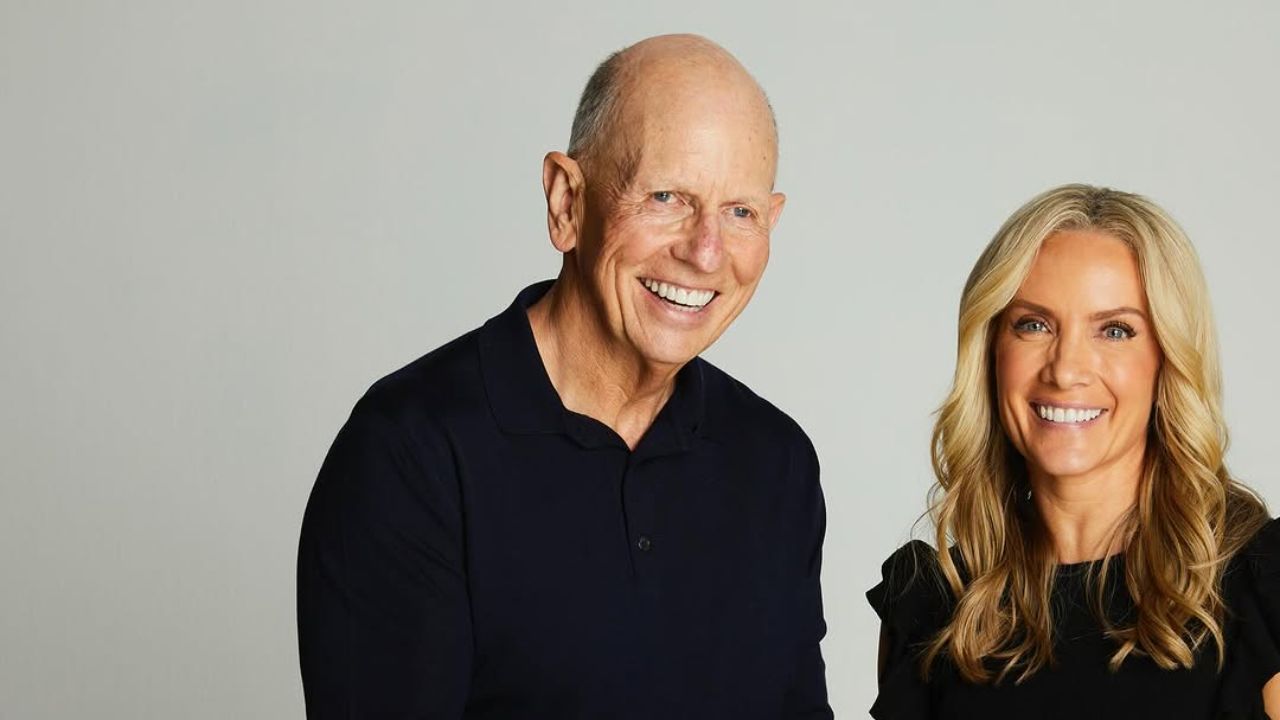
McMahon spoke candidly about a period when he found himself emotionally overwhelmed, physically exhausted, and mentally worn down. The weight of responsibility, personal struggles, and relentless expectations had taken a toll. From the outside, everything appeared stable. Inside, however, he admitted he was slipping into a place of isolation and despair, unsure of how to articulate what he was going through or even whether he could.
It was during this time, McMahon said, that Perino made sacrifices that often go unnoticed in public relationships. While she maintained her demanding professional life, she also became his quiet anchor. She listened when words were difficult to find. She noticed changes before he could acknowledge them himself. And when he tried to retreat inward, she refused to let him disappear.
McMahon described those sacrifices not as grand gestures, but as a series of small, relentless acts of care. Late-night conversations when exhaustion made silence easier. Gentle persistence when he insisted he was “fine.” Strength when he had none left to give. These moments, he said, were not visible to the world—but they were life-saving.
What struck McMahon most deeply was the way Perino carried this emotional weight without seeking recognition. She did not frame her support as rescue, nor did she demand gratitude. Instead, she offered steadiness when chaos threatened to take over. In doing so, she created a safe space where vulnerability was not weakness, but survival.

In his confession, McMahon acknowledged how difficult it can be for many men to admit they are struggling. He spoke about pride, fear, and the pressure to appear unbreakable. Those barriers nearly cost him everything. It was Perino’s unwavering presence, he said, that helped him confront those fears and accept that asking for help is not failure—it is courage.
McMahon also reflected on how the experience reshaped his understanding of partnership. Love, he realized, is not only shared joy or public success. It is found in patience, endurance, and the willingness to stand in someone else’s darkness without knowing how long it will last. Perino did not try to fix him; she stayed with him. And that, he believes, made all the difference.
Today, McMahon speaks with gratitude and humility about the life he continues to build—one grounded in honesty, emotional awareness, and appreciation for the unseen labor of love. He credits Perino not only with helping him survive a difficult chapter, but with teaching him how to live more fully beyond it.
“The light doesn’t always arrive loudly,” McMahon reflected. “Sometimes it shows up quietly, every day, in the person who refuses to give up on you.”
His confession serves as a powerful reminder that behind many public figures are private battles—and behind many survivors are partners whose sacrifices never make headlines. In sharing his story, Peter McMahon shines a light on the transformative power of love, and on the quiet heroism that can truly save a life.