d+ From Silence to Strength: Inside 13-Year-Old Brantley Simpson’s Remarkable Turn After a Life-Threatening ATV Accident

The waiting room was quiet in the way only fear can create. Phones were clutched but untouched. Every few minutes, someone glanced at the hallway, hoping for footsteps, for news, for anything. Just days earlier, 13-year-old Brantley Simpson, a close friend of Will Roberts, had been rushed to the hospital after a devastating ATV accident. What followed would test his family in ways they were never prepared for — and would ultimately leave them stunned by an outcome few dared to imagine.
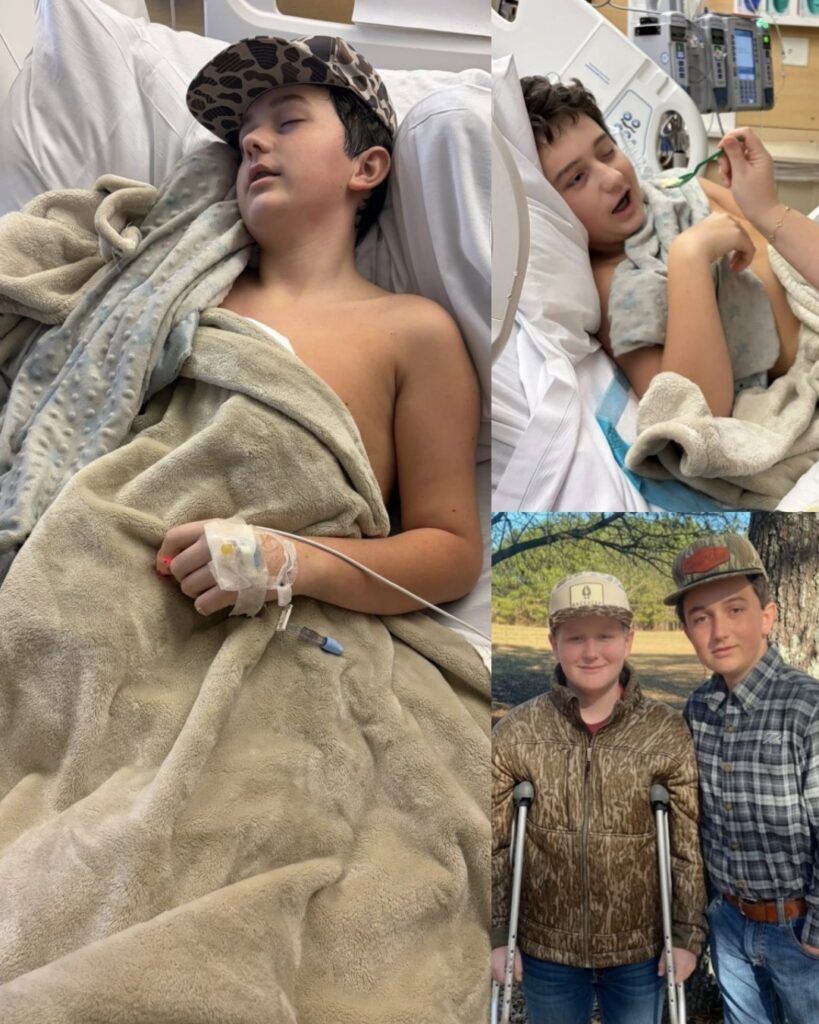
According to those closest to the situation, the accident happened suddenly and violently. Brantley suffered severe skull and facial fractures, along with a brain bleed that immediately placed his life in danger. Emergency responders moved quickly, but the seriousness of his injuries became clear almost at once. He was transported to the hospital and placed on a ventilator, unconscious, while doctors worked to stabilize swelling and monitor his brain activity.
For several days, time seemed to stop.
Family members describe those hours as a blur of medical updates, whispered prayers, and long stretches of silence broken only by the steady rhythm of machines. Each day brought cautious assessments. Each night ended with the same question hanging in the air: would tomorrow be better — or worse?
Doctors explained the risks with careful honesty. Brain bleeds are unpredictable, especially in children. Swelling can worsen without warning. Progress is rarely linear. For Brantley’s parents, the hardest part was not knowing. They sat beside his bed, watching for the smallest signs — a twitch of the fingers, a change in breathing, any indication that their son was still fighting.
Meanwhile, messages of support poured in from friends, classmates, and families who knew Brantley not as a patient, but as a kid — energetic, talkative, and inseparable from his circle of friends. Among those watching closely was the Roberts family, already familiar with the emotional toll of medical uncertainty through Will’s own ongoing health battle. The connection between the two families made Brantley’s condition feel even heavier.
Then, quietly, something shifted.
Doctors began to notice subtle improvements. The swelling showed signs of stabilizing. Brantley’s vital responses became more consistent. What had been explained as “wait and see” slowly turned into cautious optimism. Still, no one celebrated. Everyone understood how fragile the situation remained.
The moment that changed everything came without drama. Brantley opened his eyes.
At first, it was brief. Then longer. Soon, he began responding to voices. Doctors carefully reduced sedation. The ventilator, once essential, became less necessary. When it was finally removed, his family braced themselves — but Brantley breathed on his own.
What followed felt almost unreal.
Within a short span of time, Brantley was no longer confined to the bed. He stood. He took steps. He spoke. He asked questions. Nurses watched in disbelief as a boy who had been unresponsive days earlier began doing the things many feared he might never do again.
By the time doctors confirmed he was eating on his own, the mood in the room had completely transformed. Tears that once came from fear now came from relief. The same parents who had prepared themselves for the worst were suddenly being told words they barely recognized: “He’s doing incredibly well.”
Medical staff are careful to emphasize that recovery from a traumatic brain injury does not end with waking up. Brantley will continue to be monitored, and follow-up care remains essential. But his current progress — awake, walking, talking, eating — represents a best-case outcome given the severity of his injuries.
For his family, that reality is still sinking in.
“There were moments we didn’t know if we’d ever hear his voice again,” one relative shared quietly. “Now we’re listening to him joke with the nurses.”
The story has resonated deeply with those who have followed Will Roberts’ journey as well. In a season filled with difficult medical updates, Brantley’s recovery has become a rare point of light — a reminder that even in hospital hallways defined by uncertainty, hope can still arrive without warning.
Friends describe Brantley as eager to get back to normal life, already asking about school, friends, and everything he’s missed. Doctors, meanwhile, continue to urge patience. Healing takes time. But the fact that these conversations are even happening feels like a victory in itself.
As one nurse put it simply, “This is why we never stop hoping.”
There is still more to Brantley’s story — details from the days no one slept, from the moment that shifted his doctors’ expectations, and from the quiet realization his family had when they knew he was truly coming back.
Those moments, and what they meant, are being shared by his loved ones.