In the long, uncertain journey of childhood cancer, moments of genuine hope are rare — and when they arrive, they do so quietly, wrapped in caution rather than celebration. That is precisely how doctors and family members are describing the latest medical update surrounding Will Roberts, whose battle has captured the attention and prayers of many following his story.
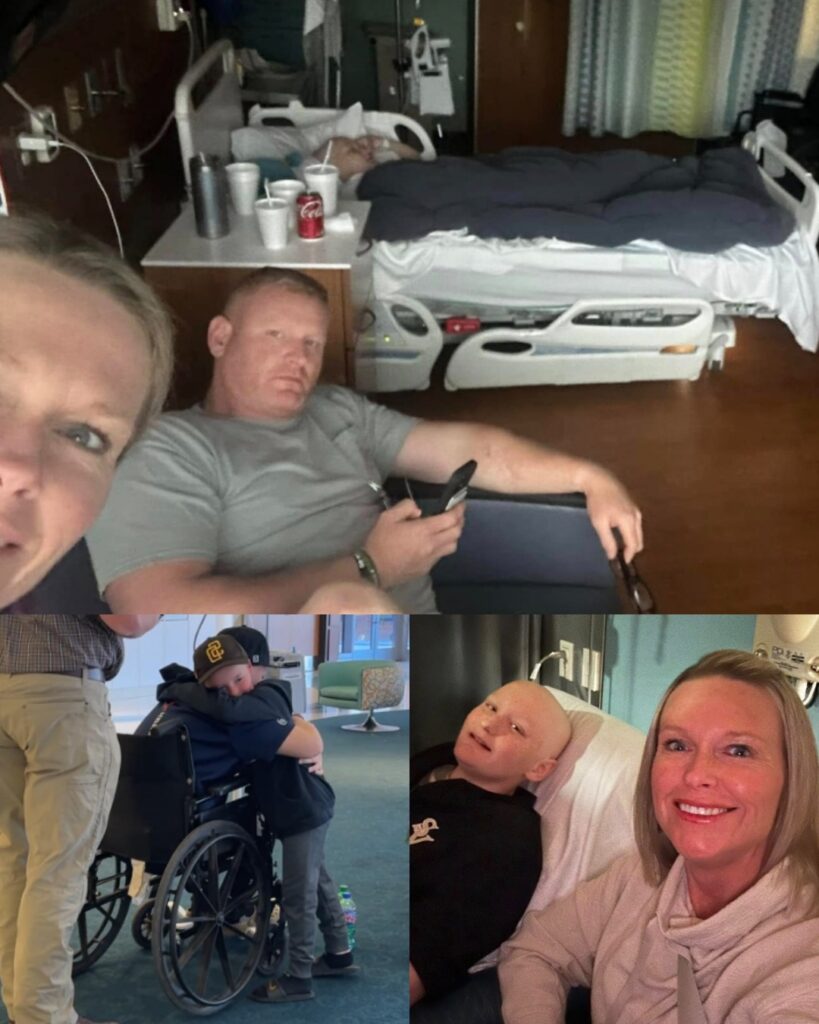
After months marked by pain, invasive treatments, and agonizing waiting, Will’s most recent medical evaluation has delivered news that doctors once hesitated to imagine. The cancer that initially took hold in his leg — the disease that shaped the earliest and most aggressive stages of his treatment — is no longer active. According to his medical team, all previously identified skip lesions in that area are now confirmed dead.
For oncologists, this finding is not just a technical victory. Skip lesions are among the most troubling complications in bone cancer, often forcing surgeons to make life-altering decisions under immense pressure. Their elimination represents a critical milestone — one that removes an entire category of surgical concern from Will’s immediate future.
But cancer rarely allows a story to end cleanly.
During the same round of scans, doctors identified two cancerous nodes in Will’s lungs. On paper, the finding is alarming. The nodes have increased in size — a detail that would normally signal progression. Yet what makes this update so complex, and so difficult to interpret, is what the scans revealed next: both lung nodes are necrotic.
Necrosis, in oncology, carries a specific and powerful meaning. It indicates that the cancer cells within the mass are no longer viable — they are breaking down rather than multiplying. While the visual growth of the nodes raises understandable concern, specialists emphasized that necrosis often points toward treatment effectiveness rather than failure.
In simpler terms, what appears threatening at first glance may actually reflect cancer cells dying off, not advancing.
Doctors were careful to frame the findings with precision. This is not a declaration of victory. It is not a signal that treatment is over, or that the road ahead will be easy. Instead, it is something far more fragile — a shift in trajectory.
“This is encouraging,” one physician involved in Will’s care explained, “but it requires continued observation. We need time, consistency, and follow-up to understand what this truly means.”
For Will’s family, that balance between hope and restraint has become familiar territory. They have learned, often painfully, that cancer thrives in uncertainty. Good news must be held gently. Promising scans must be weighed against the unpredictable nature of the disease.
Yet even measured optimism carries emotional weight.
For the first time in a long while, doctors are no longer speaking about immediate surgical escalation related to the leg cancer. Conversations that once revolved around worst-case scenarios have softened, replaced by careful monitoring and reassessment. That shift alone offers psychological relief — not just for Will, but for everyone standing beside him.
The lung findings now become the focus. Specialists will continue to monitor the necrotic nodes closely, watching for changes that confirm whether the breakdown continues or stabilizes. Additional imaging, possible biopsies, and further treatment adjustments remain on the table. Nothing is being rushed. Nothing is being ignored.
In the midst of medical terminology and scan results, it’s easy to forget the human reality at the center of it all.
Will is still a child navigating a world that most adults would struggle to endure. Hospital rooms have replaced classrooms. Scan days dictate emotional highs and lows. Moments of normalcy are brief and precious. Yet those closest to him describe a quiet resilience — the kind that doesn’t announce itself loudly but persists all the same.
For supporters following his journey, this update lands as something deeply familiar: a moment suspended between relief and restraint. The cancer in his leg, once the defining threat, has been neutralized. The lungs present new questions — but not without reason for guarded hope.
“This story isn’t over,” one family member shared. “But today feels different.”
That difference matters.
In oncology, progress is rarely dramatic. It arrives in incremental shifts, in words like “inactive,” “necrotic,” and “stable.” It arrives in doctors allowing themselves to pause — just briefly — before discussing next steps. It arrives in families learning how to breathe again, even if only for a moment.
As Will’s medical team continues to evaluate the path forward, one truth remains clear: this is a meaningful turning point. Not an ending. Not a miracle. But a step — earned through relentless treatment, expert care, and a resilience that refuses to disappear.
The coming weeks will bring more answers. For now, hope exists — cautious, quiet, and carefully protected — exactly where it belongs.