ssa Trump Claims Democrats Behind ‘Epstein Hoax’ as New Files Ignite Political Firestorm


A familiar and controversial name has once again surged back into the center of American political discourse: Jeffrey Epstein. Nearly five years after the convicted sex offender died in federal custody, newly surfaced files tied to his case have reignited public outrage, media scrutiny, and fierce partisan conflict. This time, however, the controversy has taken a sharply political turn, driven by direct accusations from U.S. President Donald Trump.
On Friday, December 26, President Trump accused Democrats of orchestrating what he described as an “Epstein hoax,” claiming that newly discovered files related to Epstein were being weaponized to distract the Justice Department from investigating alleged election fraud. Posting on his Truth Social platform, Trump asserted that “1,000,000 more pages” of Epstein-related material had been uncovered and demanded the full release of names connected to the disgraced financier.
According to Trump, the renewed focus on Epstein is not about transparency or justice for victims, but about political misdirection. He alleged that Democrats, not Republicans, were the individuals with meaningful ties to Epstein and accused them of attempting to control the narrative as more documents become public under a recently passed congressional law.
“These files are suddenly everywhere,” Trump wrote, arguing that their timing was no coincidence. “The real question is why the Justice Department is wasting time on this instead of investigating election fraud.”
The comments marked an escalation in Trump’s rhetoric surrounding Epstein, following a controversial Christmas Day post in which he sarcastically wished a “Merry Christmas” to people who “loved Jeffrey Epstein.” In that post, Trump claimed Democrats would soon have “a lot of explaining to do” as additional Epstein-related documents were released.
Epstein’s name has long been synonymous with secrecy, elite privilege, and unanswered questions. Arrested in 2019 on federal sex trafficking charges, Epstein died later that year in his Manhattan jail cell while awaiting trial. His death was ruled a suicide, but it quickly became the subject of widespread skepticism and conspiracy theories, fueled by his extensive network of wealthy and powerful associates.
Over the years, both Republican and Democratic figures have faced public scrutiny over past associations with Epstein, though no broad criminal conspiracy involving political leaders has been proven. The ongoing release of court documents—many tied to civil lawsuits and sealed testimony—has periodically resurfaced familiar names, reigniting public anger and suspicion.
Trump’s latest remarks appear aimed at reframing the Epstein controversy as a partisan issue rather than a systemic failure involving wealth, influence, and institutional oversight. By labeling the situation a “hoax,” Trump positioned himself as both a target of political manipulation and a champion of transparency, urging authorities to release all names connected to Epstein without redaction.

Democrats, for their part, have rejected Trump’s accusations, calling them baseless and inflammatory. Some critics argue that Trump’s statements risk undermining legitimate efforts to hold powerful individuals accountable, while others see his remarks as an attempt to deflect attention from broader legal and political challenges.
Legal experts note that the release of Epstein-related documents is governed by court procedures, not partisan agendas, and caution against drawing sweeping conclusions from unverified claims. They also emphasize that many names appearing in Epstein-related files do not imply criminal wrongdoing, a nuance often lost amid the online frenzy.
Nonetheless, public reaction has been intense. Social media platforms have been flooded with speculation, accusations, and renewed demands for transparency. Hashtags related to Epstein trended again within hours of Trump’s post, underscoring the enduring power of the scandal to provoke outrage and distrust.
The Justice Department has not publicly responded to Trump’s allegations, nor has it confirmed the existence of “1,000,000 more pages” of newly discovered material. Officials have previously stated that ongoing reviews of Epstein-related documents are conducted in accordance with court orders and victim privacy protections.
As the 2024 political landscape continues to take shape, the Epstein controversy appears poised to remain a potent and polarizing issue. For Trump and his supporters, the resurfacing files are framed as evidence of political hypocrisy and selective outrage. For critics, his comments risk deepening public confusion and eroding trust in institutions tasked with delivering justice.
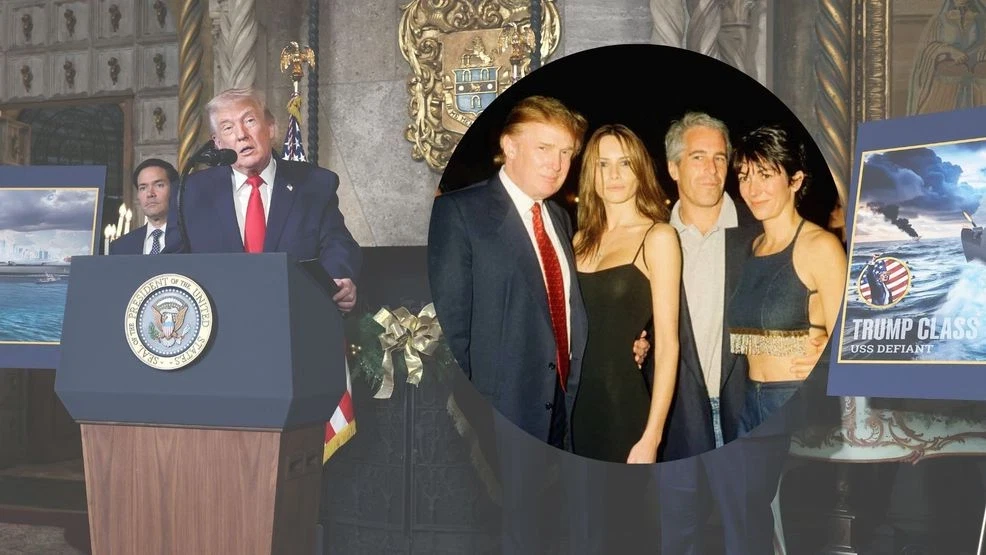
What remains clear is that Epstein’s shadow still looms large over American politics. Years after his death, his case continues to expose unresolved tensions between power, accountability, and public trust. Whether the latest round of document releases will lead to meaningful revelations—or simply fuel another cycle of partisan warfare—remains uncertain.
In the meantime, one reality is unavoidable: the Epstein scandal, far from fading into history, has once again become a battleground where politics, secrecy, and public anger collide.