SSK 👉 In the end, this wasn’t about Ilhan Omar or Stephen Miller — it was about a nation discovering just how divided it has become.

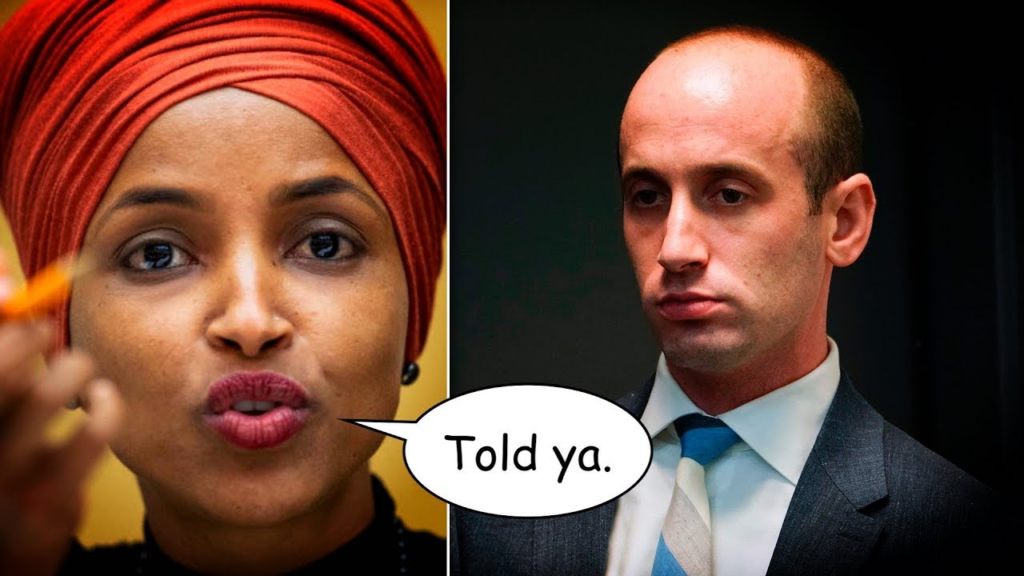
Minneapolis — A fierce national controversy erupted after Rep. Ilhan Omar drew a comparison between Stephen Miller and Nazi-era rhetoric while condemning recent arrests and deportations of Somali migrants in the United States, a remark that immediately triggered outrage, condemnation, and intense political backlash.
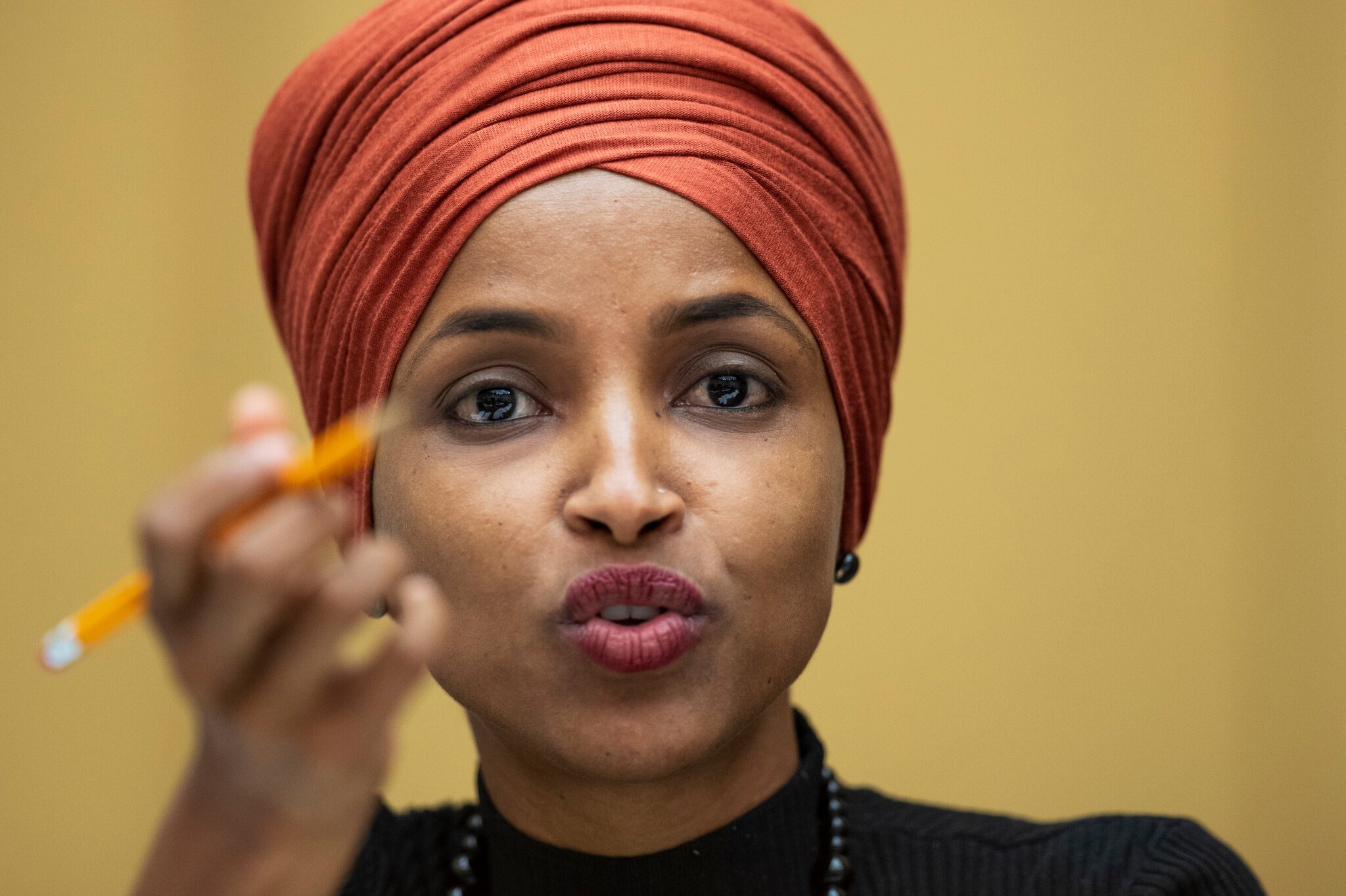
Speaking during a public discussion on immigration enforcement, Omar — a Democrat representing Minnesota — said that when she thinks about Stephen Miller and what she described as his “white supremacist rhetoric,” it reminds her of “the way Nazis described Jewish people in Germany.” Miller, who is Jewish, has been a central figure in immigration policy debates and has strongly defended enforcement actions involving arrests and deportations.
The comparison spread rapidly across social media and cable news, transforming a policy dispute into a volatile debate over history, rhetoric, and the boundaries of political discourse.
Immediate Backlash and Condemnation
Critics across the political spectrum condemned Omar’s remarks, calling the Nazi comparison inflammatory and historically reckless. Several Jewish organizations and commentators argued that invoking Nazi imagery trivializes the Holocaust and weaponizes historical trauma for political purposes.
“This kind of language crosses a line,” one civil rights advocate said. “Comparing modern policy disagreements to Nazi Germany distorts history and inflames hatred rather than encouraging debate.”
Supporters of Miller accused Omar of engaging in antisemitic rhetoric, a charge her defenders strongly deny.
Omar’s Supporters Push Back
Omar’s allies argued that her remarks were aimed at criticizing language and policy outcomes, not attacking Jewish identity. They insist her comments were meant to warn against dehumanizing rhetoric in immigration debates and should be understood within that context.
Supporters also emphasized the impact of immigration enforcement on Somali communities, particularly in Minnesota, which is home to one of the largest Somali-American populations in the country.
“This is about families being torn apart,” one advocate said. “The outrage over language is drowning out the human consequences of these policies.”
Miller Defends Enforcement Actions
Stephen Miller has defended immigration arrests and deportations as lawful and necessary, arguing that enforcement is applied across nationalities and is rooted in existing federal law. He has rejected claims that the policies are racially motivated, saying enforcement is based on legal status, not ethnicity or religion.
The clash has intensified as immigration remains one of the most polarizing issues in American politics, intersecting with questions of race, religion, national identity, and historical memory.
A Nation Once Again Divided
What began as a policy dispute has now evolved into a broader cultural and historical confrontation — one that has reignited debates over the use of extreme historical analogies in modern politics and the responsibility of elected officials to choose their words carefully.
As Minnesota becomes the epicenter of this latest political storm, the controversy underscores a deeper national question:
When political rhetoric invokes the darkest chapters of history, does it illuminate injustice — or does it deepen division in a nation already on edge?
ONE MAN AGAINST THE ENTIRE SYSTEM: THE “WARRIOR LION” NARRATIVE THAT HAS AMERICA TALKING-002

From the moment he stepped onto the national stage, Donald Trump has framed his presidency as a battle—not just against political opponents, but against what he calls a deeply entrenched power structure in Washington. To his supporters, the story is simple and visceral: a lone figure standing firm while the system pushes back with everything it has.
“They came at him from day one,” a longtime ally said, leaning forward as if recounting a war story. “Investigations, leaks, constant attacks—it never stopped.” Trump himself has echoed that sentiment repeatedly, arguing that the resistance he faced was never about policy alone, but about power. “They don’t hate me,” he once told a crowd. “They hate you—and I’m in the way.”
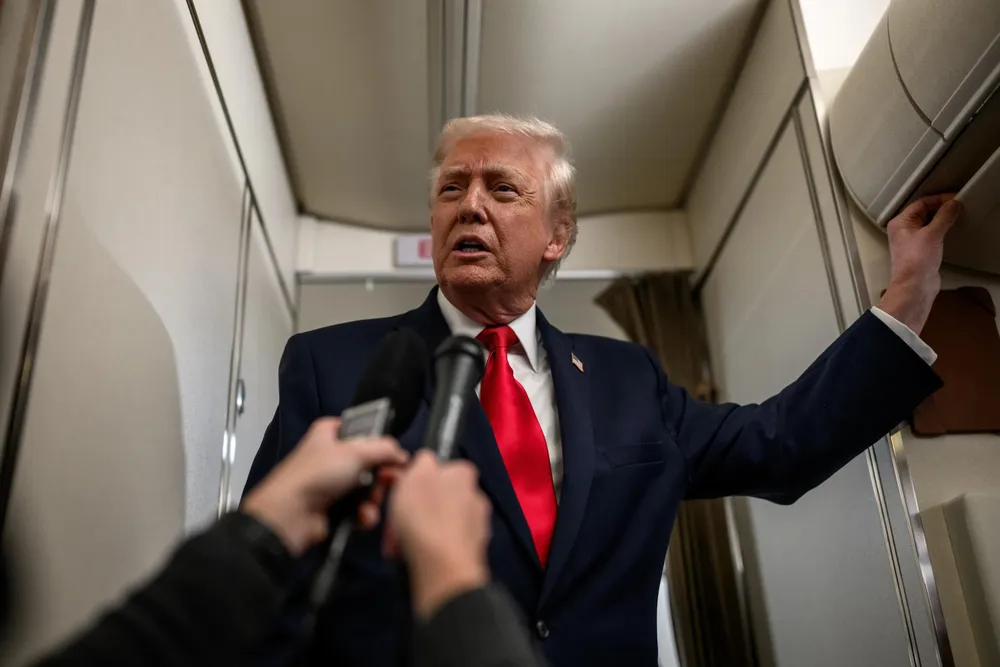
The imagery has stuck. Supporters increasingly describe Trump as a “warrior lion”—outnumbered but unbowed. At rallies, the language turns cinematic. “A lion doesn’t ask permission,” one speaker declared to roaring applause. “A lion stands its ground.” The crowd erupted, chanting as Trump raised a fist, soaking in the moment.
Critics see something else entirely. “This is mythology, not governance,” a Democratic strategist argued on television. “It turns politics into a fantasy battle.” A conservative commentator shot back immediately: “People don’t follow fantasies—they follow strength.” The exchange captured the divide that defines Trump’s legacy.
Behind the scenes, aides say Trump’s resolve hardened with every challenge. “Each attack convinced him he was right,” one former adviser said. “That if the system was this angry, it must be protecting something.” When asked why he never backed down, Trump’s answer was characteristically blunt: “If you fold, you lose the country.”
To supporters, that refusal to bend is exactly what America needs. “He fights,” a voter said outside a rally. “Everyone else negotiates.” To detractors, the same trait is dangerous. “Strength without restraint is reckless,” a former official warned.
Yet the narrative endures because it speaks to emotion more than policy. It casts politics as a struggle of survival—freedom versus control, prosperity versus decay. Whether embraced as truth or rejected as theater, the image is powerful:
one man against the entire system, roaring back when cornered.
And as long as that image resonates, the debate won’t fade. Because for millions of Americans, the question isn’t whether the “warrior lion” metaphor is accurate—it’s whether the fight it represents is far from over.