SSK After a near-fatal overdose in 2007, Eminem’s decision to embrace sobriety in 2008 became the turning point that saved his life, reshaped his career, and turned him into a lasting symbol of resilience and recovery.

From the Edge of Death to a Legacy of Strength: How Eminem’s Sobriety Saved His Life and Redefined His Greatness
In December 2007, Marshall Mathers — the man the world knows as Eminem — was standing at the edge of a cliff few ever come back from.
At the height of his fame, with tens of millions of albums sold and a cultural footprint that reshaped hip-hop forever, Eminem nearly lost everything. A near-fatal overdose of prescription drugs and alcohol left him fighting for his life, forcing a reckoning that would become one of the most pivotal moments not only in his personal journey, but in modern music history.

What followed was not just recovery — it was reinvention.
The Fall No One Saw Coming
To the public, Eminem appeared unstoppable. He was controversial, brutally honest, commercially dominant, and lyrically untouchable. But behind the scenes, the pressures of fame, personal loss, and relentless expectations were slowly destroying him.
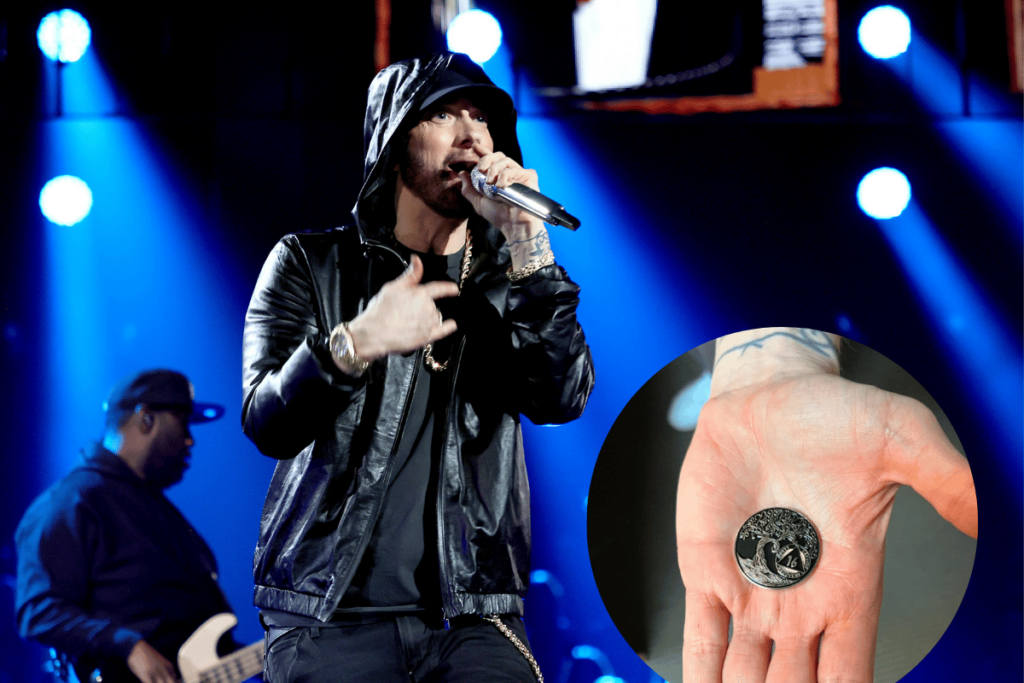
Prescription pills became a crutch. Alcohol blurred the pain. What began as coping mechanisms spiraled into dependency. By 2007, Eminem was consuming a dangerous cocktail of substances that would eventually shut his body down.
The overdose was severe. Doctors later said he was lucky to survive.
For many artists, that moment would have ended the story. For Eminem, it became the beginning of a new one.
April 2008: The Line in the Sand
In April 2008, Eminem made a decision that would define the rest of his life: he quit all substances — completely and permanently.
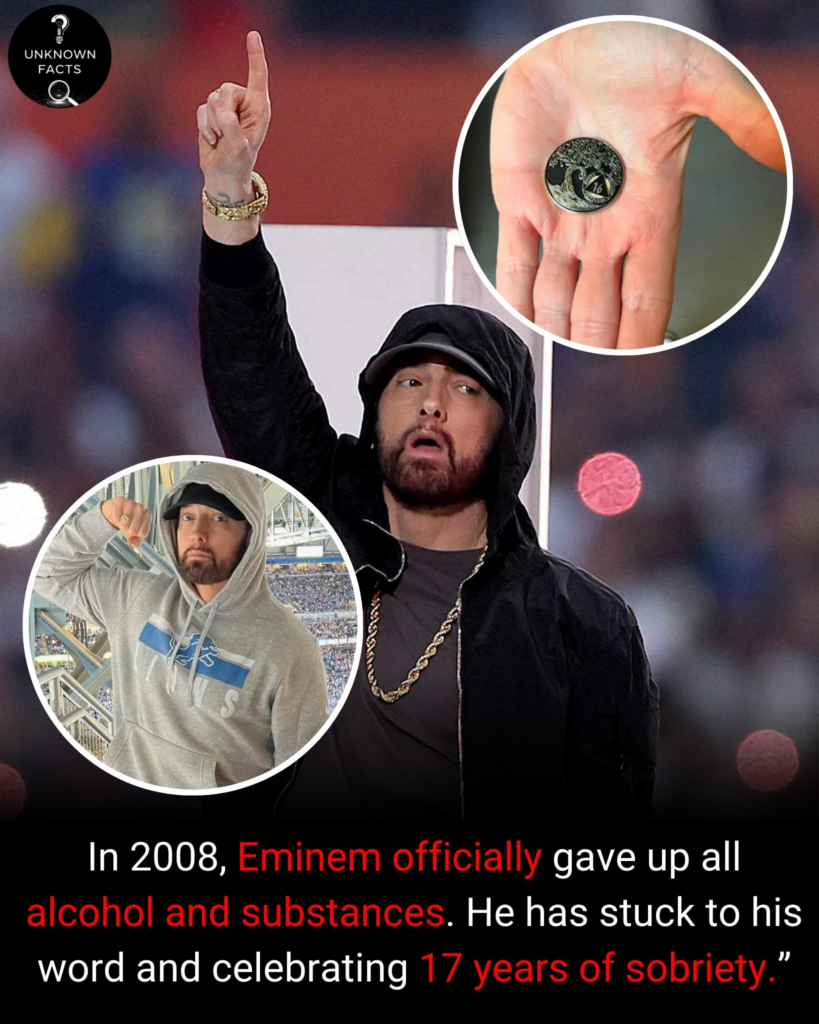
There were no half-measures. No moderation. No excuses.
Sobriety wasn’t just about staying alive; it was about taking back control.
“It wasn’t easy,” Eminem has admitted in later interviews. Recovery demanded discipline, honesty, and daily commitment — qualities that mirrored the intensity he once poured into his music.
But this time, the fight was for himself.
Relearning How to Live — and Create
One of the biggest fears for artists battling addiction is the idea that sobriety will dull their edge. Eminem faced that fear head-on.
Could he still write without substances?
Could he still feel deeply?
Could he still be Eminem?
The answer came loud and clear.
Sobriety sharpened him.
As his mind cleared, Eminem rediscovered structure, focus, and purpose. He rebuilt his routines. He trained his brain like a muscle. He relearned how to write, record, and perform without chemical assistance — and in the process, he became more precise than ever.
Albums like Relapse, Recovery, The Marshall Mathers LP 2, and later projects reflected an artist who had not lost his fire — but refined it.
Family as the Anchor
At the center of Eminem’s recovery was something far more powerful than fame: family.
Sobriety allowed him to be present — truly present — for his daughters. It gave him clarity about what mattered when the lights went out and the crowds disappeared.
He has spoken openly about how staying sober isn’t just about his career or his legacy, but about being the father his children deserve.
For a man who built his image on chaos and confrontation, that quiet responsibility became his strongest motivation.
Seventeen Years Sober — A Quiet Victory
In 2025, Eminem marked 17 years of sobriety — a milestone that speaks volumes about consistency, not headlines.
There were no extravagant celebrations. No dramatic announcements. Just acknowledgment — and gratitude.
Recovery, he has emphasized, isn’t a finish line. It’s a daily practice.
Seventeen years represents thousands of individual decisions:
- to say no
- to stay disciplined
- to choose long-term life over short-term escape
In an industry where relapse stories often dominate the narrative, Eminem’s sustained sobriety stands out as a rare and powerful achievement.
Changing the Conversation Around Addiction
Eminem never positioned himself as a motivational speaker. He didn’t soften his language or sanitize his past. Instead, he told the truth — raw, uncomfortable, and real.
That honesty changed how fans viewed addiction.
He proved that addiction doesn’t discriminate by talent, success, or wealth — and that recovery doesn’t require perfection, only commitment.
Millions of listeners found pieces of themselves in his struggle. For many, Eminem’s survival wasn’t just entertainment — it was hope.
Strength Without Illusion
What makes Eminem’s story resonate is not the absence of struggle — but the refusal to glamorize it.
He never pretended sobriety fixed everything overnight.
He never claimed recovery was easy.
He never denied how close he came to losing his life.
That realism gives his journey credibility.
Sobriety didn’t make Eminem softer.
It made him stronger — mentally, creatively, and emotionally.
A Legacy Redefined
Today, Eminem’s greatness is measured by more than chart positions or lyrical battles.
It’s measured by endurance.
By the fact that he stood at death’s door — and walked back.
By the discipline to rebuild himself from the inside out.
By the ability to evolve without losing authenticity.
In an industry obsessed with excess, Eminem’s sobriety is a quiet rebellion.
The Meaning of Survival
Eminem’s decision in 2008 didn’t just save his life.
It reshaped his future.
It preserved his voice.
It allowed his story to continue.
From near-fatal overdose to nearly two decades of sobriety, Marshall Mathers became more than a rap icon — he became living proof that transformation is possible, even at rock bottom.
And perhaps that is his most powerful verse of all.