dan. “Seized: 1,600 Pounds of Meth Trafficked via Blackberries — One Ex-Inmate Now Faces New Federal Indictment”

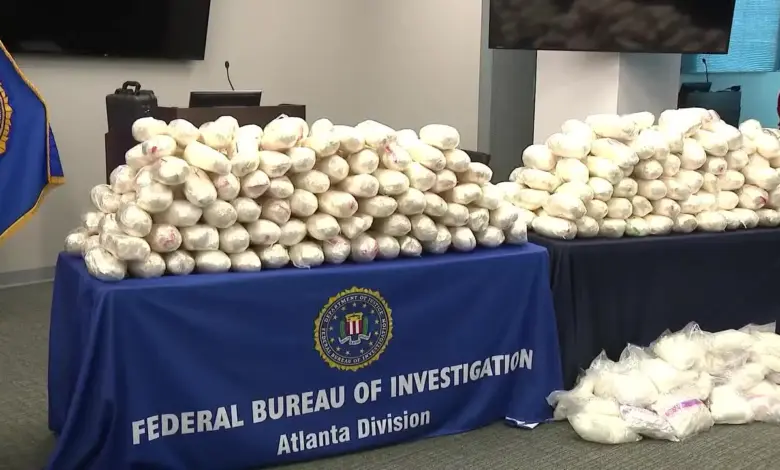
In a dramatic bust that reads like something out of a crime thriller, federal authorities have announced the seizure of nearly 1,600 pounds of methamphetamine — reportedly hidden inside shipments of fresh blackberries. The discovery has led to a new indictment against a former inmate, accused of orchestrating what appears to be a high-stakes smuggling operation using fruit containers as a cover for drug trafficking.
A Shipment, a Sting — and a Massive Seizure
According to officials, the meth haul was discovered during an inspection of what seemed — at first glance — to be ordinary produce containers. What made the shipment suspicious turned out to be far from ordinary: inside the boxes of blackberries, law-enforcement agents uncovered a sophisticated concealment, revealing over 1,600 pounds of meth. The street value? Authorities estimate the illicit cargo is worth tens of millions of dollars, underscoring the scale and boldness of the operation.
The bust marks one of the largest methamphetamine seizures in recent memory involving agricultural produce — a stark reminder of how traffickers adapt and exploit everyday supply-chains to mask illegal activity.
From Prison Record to Alleged Mastermind
At the center of the indictment is a man described as a “Mexican illegal immigrant,” who previously served a 17-year federal prison sentence for meth trafficking and a weapons charge. Prosecutors say this is not his first offense — but possibly his most ambitious.
According to court documents, after his release, he allegedly shifted tactics: instead of more overt drug operations, he is accused of orchestrating a smuggling ring that uses fruit shipments — in this case, blackberries — as a front. By tapping into legitimate produce supply-chains and leveraging transnational shipping networks, the accused reportedly believed he could evade detection.
But law-enforcement investigators say they uncovered the scheme before the meth could reach its intended distribution points. The size and value of the seizure — 1,600 pounds — suggest this was no small-time operation. Prosecutors are pursuing federal charges that could carry severe sentences if he is convicted.
The Smuggling Modus Operandi: Why Blackberries?
Using produce shipments — especially fruits and vegetables — for drug smuggling is not new, but this case stands out for its scale. Fresh produce moves rapidly across borders, often through expedited logistics and without lengthy scrutiny: a feature that traffickers may exploit.
Blackberries, in particular, have characteristics that may appeal to smugglers: small size, bulk packaging, and perishable nature. These traits can make detailed inspection more difficult — especially during busy shipping seasons when inspectors may face pressure to clear shipments quickly. Hiding contraband among legitimate goods can help mask the smell, appearance, and sheer volume of the narcotics inside.
In this case, authorities suspect the smugglers tried to take advantage of just such vulnerabilities in the supply-chain and inspection protocols. But their efforts unraveled when federal agents flagged the shipment and deployed targeted inspection and search procedures.
Implications: From Supply-Chain Vulnerability to Smuggler Creativity
This seizure underscores a broader, worrying trend: drug traffickers’ growing sophistication in bypassing traditional border controls. As law enforcement tightens standard entry points — ports, airports, road checkpoints — traffickers adapt by using less-conspicuous channels: commercial shipping, agricultural exports, import/export produce logistics.
For the produce and farming industry, the news shakes confidence. Growers, distributors, and retailers now face increased scrutiny, tighter inspections, and potential regulatory backlash. Innocent shipments may be delayed or diverted, and legitimate businesses may suffer reputational damage — even if totally uninvolved.
For law-enforcement and customs agencies, the case is both a win and a warning. It shows that vigilance, intelligence-driven inspections, and inter-agency cooperation can catch traffickers — but also that smugglers will relentlessly seek new loopholes. Authorities may now need to revisit screening protocols for produce exports/imports, invest in better detection technology, and heighten inter-agency communication.
The Human Angle: Smuggling, Immigration, and Moral Complexity
There’s also a deeper, more troubling dimension: the intersection of drug trafficking and illegal immigration. The accused is described as an immigrant with a prior criminal record who allegedly exploited his status and history to re-enter or remain in the U.S. under questionable circumstances, then allegedly turned to smuggling.
That raises hard questions about immigration enforcement, border policy, and rehabilitation. On one hand, supporters of stricter immigration and criminal-justice measures will likely point to this case as evidence of the dangers posed by allowing certain individuals — especially those with serious prior convictions — to remain in or re-enter the country. On the other hand, critics may warn against using isolated cases as justification for sweeping policy crackdowns, arguing that the vast majority of immigrants are law-abiding and that focusing on a few high-profile criminals can unfairly stigmatize entire communities.
Moreover, the case adds complexity to debates about redemption, reintegration, and recidivism. A former inmate with a history of meth trafficking and gun crimes allegedly returning to large-scale drug smuggling — if proven — would be a harrowing example of recidivism at an extreme level. It raises questions about how well prison release supervision, rehabilitation, and post-release monitoring are working — especially for high-risk individuals.
What’s Next — Prosecution, Prevention, and Public Safety
Prosecutors have indicated they will seek strong federal sentences if the accused is found guilty, citing the quantity of drugs seized and the sophisticated concealment tactics as aggravating factors. Conviction could mean decades behind bars.
At the same time, the case is likely to trigger wider changes: customs agencies may tighten inspections of produce imports; congressional or regulatory bodies may call for reform of inspection protocols; and industry stakeholders may lobby for clarity and safeguards — both to prevent drug smuggling and to protect legitimate goods from unfair scrutiny.
Public-safety advocates warn the seizure may just be the “tip of the iceberg.” If one major smuggling ring was using fruit shipments, there may be others — some still operating undetected.
Finally, the case could fuel public debate — and political pressure — around immigration, border security, and criminal justice: especially at a time when national attention is already focused on drug trafficking, opioid crises, and cross-border crime.
Conclusion: A Stunning Bust — And a Warning
The seizure of 1,600 pounds of meth hidden inside seemingly innocent blackberry shipments — and the subsequent indictment of an ex-inmate allegedly behind the operation — is more than a sensational headline. It is a stark illumination of the evolving tactics traffickers use, the vulnerabilities of global supply-chains, and the deep social, legal, and ethical entanglements between drug crime and immigration.
If law enforcement, policymakers, and the public treat the case merely as a shocking outlier — rather than a wake-up call — the risk is that more shipments, more smuggling rings, and more destructive flows may go unnoticed.
But if this bust leads to systematic reforms — tighter supply-chain oversight, better cross-agency cooperation, and smarter enforcement strategies — it could mark the start of a new front in the fight against drug trafficking.
Either way: this seizure is a wake-up call. It reveals how far traffickers will go — and how vigilant we’ll need to be to stop them.

